

Duane Jones, BS Pharm, and Jennifer Griffin, PharmD, provide their reasons behind the need for expanding pharmacists’ prescribing abilities.

Brian Nowosielski is an editor at Drug Topics®. He graduated in 2021 from Temple University with a degree in journalism and an English minor. He's been an associate with MJH Life Sciences since February 2024 and has a background in digital and print content for the pharmacy and travel industries.
Duane Jones, BS Pharm, and Jennifer Griffin, PharmD, provide their reasons behind the need for expanding pharmacists’ prescribing abilities.

Through the scope of Nigerian pharmacists and their vaccination rates, researchers assessed strategies for advancing public health.

For patients with confirmed invasive pneumococal disease, researchers compare the effects of serotype 4 with additional strains.

Among COVID-19 vaccine recipients, researchers assess the safety and efficacy of the 2023-24 protein-based and mRNA COVID-19 vaccines.
Heidi Overton, MD, PhD, was nominated to the position amid debates on abortion pill access, childhood immunization schedules, and more.

Rick Couldry, MS/HSPA, discusses how cloud-native software resolves fragmented systems, improves tracking, and streamlines clinical workflows.

Hailey Choi, PharmD, BCAC, CDCES, Jana Murry, PharmD, RPh, and Spencer Casella, PharmD, RPh, answer key questions on GLP-1 compounding.

Natalie DiPietro Mager, PharmD, PhD, meets with Sally Rafie, PharmD, BCPS, to explore misinformation on contraception and other women’s health topics.

In part 2, Rick Couldry, MS/HSPA, provides necessary nuance to the value driving cloud-based medication management to the forefront of health care.

Across 3 survey periods spanning 2017 to 2023, researchers assess various institutions’ knowledge of pneumococcal vaccination.

A cohort of Black and white Americans was asked about medical racism, misinformation, COVID-19 vaccine safety, and more.
This episode provides a detailed breakdown of the CVS Caremark-FTC settlement from July, exploring a shifting landscape of pharmacy benefit management.

Rick Couldry, MS/HSPA, provides his expertise for why medication management requires modernization to further streamline patient outcomes.

Researchers assess the effects of pharmacist support in enhancing GLP-1 access in a primary care setting.

The year 2026 has brought a stark paradox to American pharmacy practice, and it’s affecting the most sought-after prescription drugs on the market.
The pharmacy benefits industry is undergoing a massive restructuring, driven by a wave of government action designed to shift focus back to the patient.

A new pharmacy-based program in rural America is potentially identifying and saving thousands of patients from cardiovascular disease.

Researchers explore the role of pharmacists in medication reconciliation and patient counseling.

In part 2, McMahan contextualizes the recent FTC-Caremark settlement with some of the industry’s major reform efforts in recent history.

Researchers map the structural components that allow for a more patient-centered approach across pharmacist-led management.

Researchers aim to better understand the perspectives of providers amid ongoing transformations.
This episode provides an introspective look at the people in pharmacy who are the hardest to lead toward a path of success.

Separating medical and nonmedical products leads to a variety of better inventory decisions in community pharmacies.

Rae McMahan joins to provide key insights and updates on developing action between CVS Caremark, the FTC, and the rest of the pharmacy benefits industry.

Researchers aimed to better understand the prominence of vaccine failures and breakthrough infections of pediatric pneumoccoal immunization.
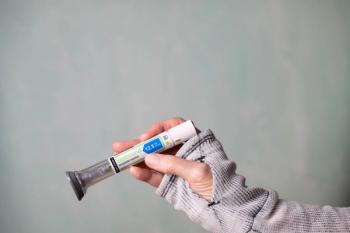
From their originally intended purposes to the growing indications showing promise in development, GLP-1 and GIP receptor agonists have evolved rapidly.
Despite significant progress made in the US opioid epidemic, systemic change is necessary to move pain management forward across health care.

Empathy amongst patients’ most trusted health care providers can translate to better outcomes and health care delivery.
Following multiple exits in this role throughout President Trump’s second term, the new director’s tenure is reported to be permanent going forward.
Episode 13 assesses the evolution of MASH, how it’s managed by pharmacists, and how it provides another avenue for improving cardiometabolic disease.