

The FDA’s Pharmacy Compounding Advisory Committee will meet in late July of 2026 to convene on peptides and their inclusion on the 503A Bulk Drug Substances List.

Brian Nowosielski is an editor at Drug Topics®. He graduated in 2021 from Temple University with a degree in journalism and an English minor. He's been an associate with MJH Life Sciences since February 2024 and has a background in digital and print content for the pharmacy and travel industries.
The FDA’s Pharmacy Compounding Advisory Committee will meet in late July of 2026 to convene on peptides and their inclusion on the 503A Bulk Drug Substances List.
In an evolving pharmacy landscape, accreditation can be difficult to manage, which is why experts like Mitch Lamb, PharmD, can steer businesses onto their desired paths.

This proposed rule builds on previous CMS guidance from 2020 and 2024.

New research examines what drives, or hinders, pharmacists when guiding patients through self-medication decisions for minor ailments like cold and flu.

In an exploration of pharmacists’ self-efficacy, researchers explored medication counseling outcomes for older adults across various languages.

Researchers conduct an exploration of e-prescription challenges and potential across pharmacies in Germany.

Sally Rafie, PharmD, BCPS, discusses current developments regarding access to the abortion pill and other notable events regarding women’s reproductive rights.
This episode highlights key DSCSA updates in 2026, T3 documentation going forward, and many more developments surrounding the law.

Low pneumococcal vaccine rates have potential to significantly impact a variety of at-risk populations, even groups of certain health care workers.

Researchers measure exactly how much pharmacist-provided care is being underbilled and what gaps mean for the future of reimbursement.

Through the lens of changes in medication adherence, researchers assessed differences in CVD-related emergency department visits and total cost of care.
With a 7-year target date, the FDA is moving away from 10-digit NDCs and toward a universal 12-digit format.

In a recent research letter, investigators establish how removal of in-person dispensing requirements impact mifepristone pharmacy access.

In this episode, Natalie DiPietro Mager, PharmD, PhD, meets with Kami Dixon, MD, MA, to discuss the racial disparities across women’s health in the US.

Exploring both patient-level and organizational factors, researchers assess community pharmacy accessibility for immunizations and injectables.
In part 2, Neal Cooper and Matt Sample address the foreseeable challenges and necessary questions surrounding the FDA’s push toward 12-digit national drug codes.

Chad Worz, PharmD, BCGP, FASCP, and Jeffrey Hogan, present on the implications behind major PBM reform signed in February and how the reimbursement landscape is expected to shift.

Matt Sample and Neal Cooper join to discuss the beginning stages of the FDA’s 7-year rollout of new NDCs for prescription drugs.
This episode explores the gaps between pharmacy leaders and the communities, and patients, that they serve.

Researchers assess medication adherence across initial combination therapy users during their first year of type 2 diabetes treatment.

With persistent challenges in the arena of US maternal health care, researchers assess pharmacists’ knowledge, confidence, and perceived barriers in filling maternal health gaps.

Pharmacists expand vaccine access, but billing rules, payer barriers, and uneven reimbursement keep immunization services from scaling nationwide.
With workforce and work-life balance issues plaguing pharmacy, the newly introduced hybrid pharmacist role is creating innovation across the greater pharmacy industry.
Episode 9 dives into the landscape of obesity pharmacotherapy, detailing current therapies, clinical updates, future pipelines, and more.
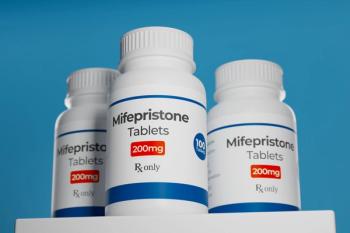
As debates heat up between anti-abortion and pro-life advocates, the federal government places a hold on any action toward mifepristone’s approval.

In part 2 of our interview with Walgreens Chief Pharmacy Officer Rick Gates, he explored the modernization behind his organization’s newly introduced ‘hybrid pharmacist’ role.
In response to evolving serotypes and vaccine guidance, researchers assess the most effective pneumococcal vaccination strategies across Taiwan.

Researchers aim to update and expand on register-based surveillance of severe acute respiratory infections related to Streptococcus pneumoniae in Denmark.

Emily Eddy, PharmD, BCACP, BC-ADM, CDCES, presents on the ever-expanding world of glucagon-like peptide-1s, now heading toward indications for chronic kidney disease and substance use disorder.

Rick Gates, chief pharmacy officer at Walgreens, helps introduce his organization’s innovative new ‘hybrid pharmacist’ role.