The oral tablet formulation was approved for adults with weakened immune systems who have not responded to other therapy.
The Libre Duo 10 Day Continuous Dual Glucose Ketone Monitoring System will soon be available for patients 2 years and older with diabetes.
The FDA authorizes the Libre Duo 10 Day Continuous Dual Glucose Ketone Monitoring System as the first device of its kind for patients 2 years and older with diabetes, according to a release.1 With its ability to continuously track ketone and blood sugar levels simultaneously, this approval gives pharmacists yet another avenue for keeping patient outcomes safe and positive in diabetes management.
“Pharmacists are ideally positioned to turn this new stream of data into an actionable safety plan,”
Diabetic ketoacidosis (DKA) is a life-threatening metabolic complication triggered by insulin deficiency. When the body lacks sufficient insulin to utilize glucose, it breaks down stored fat for energy, producing acidic byproducts called ketones.2,3
READ MORE:
DKA is particularly dangerous for the estimated 2.1 million Americans with type 1 diabetes. Symptoms include vomiting, abdominal pain, difficulty breathing, and sweet-smelling breath.1,3
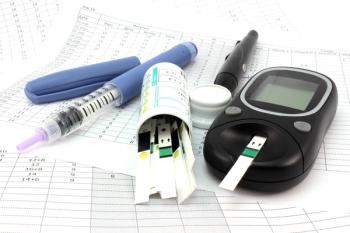
In the US, a single DKA episode incurs substantial health care costs, averaging up to $36,000. Although standard urine ketone strips are frequently used, they only measure acetoacetate, degrade quickly in humid environments, and fail to reflect real-time circulating ketone levels.3,4
The Libre Duo system addresses this by continuously measuring beta-hydroxybutyrate (BHB), the predominant ketone during DKA, directly in the interstitial fluid.1,2,4
“One of the greatest challenges in preventing DKA is that early symptoms can be vague and patients may delay ketone testing,” continued Goldman. “Monitoring that occurs in the background could reduce reliance on symptom recognition and remembering to perform a separate test.”
Continuous ketone monitoring is especially vital with the rising use of SGLT2 inhibitors. Despite these drugs offering significant cardiorenal protection, they also elevate the risk of euglycemic DKA.2,4
This atypical complication presents with normal or only mildly elevated blood glucose levels, making it hard for patients to recognize. The underlying mechanism of SGLT2 inhibitors alters the glucagon-to-insulin ratio, accelerating fat breakdown and hepatic ketogenesis even when blood sugar is controlled.
Because the Libre Duo system sends wireless alerts to compatible smartphones when ketones rise, it allows for early clinical intervention.1
“Continuous ketone monitoring changes the question from, ‘Did the patient remember to check ketones?’ to ‘Are ketones rising right now?’” Goldman told us. “That transition from episodic testing to continuous awareness could create an earlier opportunity to intervene before metabolic deterioration becomes an emergency.”
Pharmacists managing patients on SGLT2 inhibitors can also utilize this real-time data to reinforce “sick-day” plans, ensuring patients hydrate and adjust insulin safely.2,3
As accessible care providers, pharmacists are uniquely positioned to translate advanced technology into clinical practice. Under collaborative practice agreements (CPAs) or collaborative drug therapy management (CDTM), pharmacists assess patients, order labs, and adjust anti-hyperglycemic medications.4-6
With the Libre Duo, pharmacists can assist patients with initial device setup, sensor insertion safety, and data interpretation. Instead of sporadic finger sticks, pharmacists can interpret continuous glucose and ketone data together, helping to embed these metrics into standard ambulatory glucose profiles to model risk and prevent emergencies.4,5
Research shows that pharmacist-led clinical interventions significantly reduce HbA1c and improve patient quality of life.6
Beyond therapy adjustments, pharmacists help patients overcome financial and insurance barriers to obtain critical diabetes supplies. They navigate prior authorization processes and optimize prescriptions based on formulary coverage.5
During transitions of care, clinical pharmacists provide intensive education to improve adherence and reduce readmissions. Collaborative diabetes management programs have been shown to significantly reduce all-cause emergency department visits and hospitalizations, yielding substantial health care cost savings.1,2,6
By combining specialized pharmacotherapy with medical device support, pharmacists can successfully integrate continuous dual monitoring into mainstream care to optimize patient outcomes with the help of devices like the Libre Duo.5,6
“Glucose is only one part of the metabolic picture,” concluded Goldman. “A person can have dangerous ketone accumulation without marked hyperglycemia, particularly when using an SGLT2 inhibitor. Seeing glucose and ketone trends together may help patients and clinicians recognize risk that a traditional glucose monitor alone could miss.”
READ MORE:
Pharmacy practice is always changing. Stay ahead of the curve with the Drug Topics newsletter and get the latest drug information, industry trends, and patient care tips.
Subscribe