

Brian Smith, PharmD, explains how direct-to-consumer GLP-1 pathways broaden initial access but endanger long-term patient adherence.

Brian Nowosielski is an editor at Drug Topics®. He graduated in 2021 from Temple University with a degree in journalism and an English minor. He's been an associate with MJH Life Sciences since February 2024 and has a background in digital and print content for the pharmacy and travel industries.
Brian Smith, PharmD, explains how direct-to-consumer GLP-1 pathways broaden initial access but endanger long-term patient adherence.

First approved for adults in 2022, the therapy is now cleared for adults and pediatric patients weighing 66 lbs or more with symptomatic obstructive hypertrophic cardiomyopathy.

With the inherent value medications provide in the greater health care system, Jennifer Hammons, PharmD, DrPH, argues that rural pharmacies deserve the proper recognition.
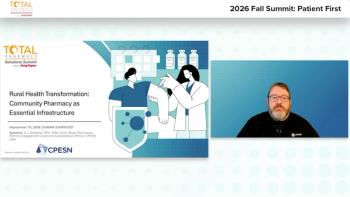
EJ Stoepfel, RPh, MBA-HCA, discussed how community pharmacies can secure federal rural health funding to expand clinical services and integrate with care teams.
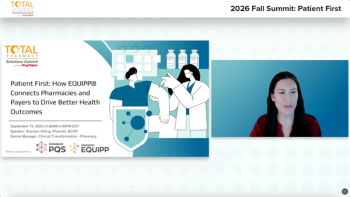
Rosalyn Otting, PharmD, BCGP, presents on how to close gaps between patients seeking better outcomes and pharmacies seeking recognition for their services.
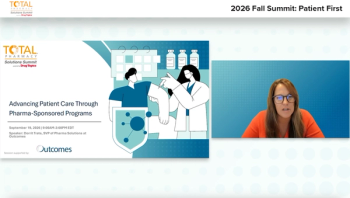
Dorrit Trate, MHA, explored how community pharmacies can improve a multitude of patient experiences through pharma-sponsored support programming.

Researchers compared vaccine coadministration with single-dose, sequential vaccination for the RSVPreF3 OA vaccine formulation in adults.

Despite technology fostering a new generation of health care delivery, experts believe rural health solutions should be sought elsewhere.

Researchers outline individual peripheral arterial disease burden as well as the most at-risk patient populations and treatment recommendations.

Darren Mensch, PharmD, BCPS, BCACP, provides evidence-based nuance regarding the emergence of mRNA vaccine technology and health care’s understanding of it.

Pharmacist and public health expert Jennifer Hammons, PharmD, DrPH, discusses pharmacy as essential infrastructure amid rural pharmacies persistently being overlooked.

In an exploration of 2 distinct timeframes in the 21st century, researchers examine the use and concurrent use of medication types among elderly US adults.
This episode offers a detailed look into the FDA’s recent PCAC meeting and what the future of peptide compounding could lead to for pharmacy professionals.

With obesity, muscle loss, and sleep disorders so prominent in postmenopause, providers are now looking into further expansion of GLP-1 use.
As midterm elections approach, the pharmacy industry is backing one of its most meaningful bills yet while the current congressional session wanes.

Eli Lilly’s new indication helps improve medication delivery for adults with type 2 diabetes, reducing annual injections by over 300.

Pennsylvania has become the center of the outbreak as cases exceed 775 alongside conflicting mortality reports.

Mark Garofoli, PharmD, BCGP, CPE, CTTS, explains how to guide patients past crowded combination products, uncertain decongestants, and hidden risks in OTC aisles.

Chad Worz, PharmD, BCGP, FASCP, explains why the Main Street Pharmacy Access Act's reimbursement provisions are key to unlocking pharmacy's clinical future.

In a review of records assessing patients with type 2 diabetes, researchers provide a comprehensive detail of strategies leading to diabetes remission though gaps persist.

Exploring the effects of weight-loss and GLP-1 therapies, researchers determine the specific metabolic determinants that lead to patients’ weight reduction.

Observed by APhA and ASHP since 2023, bipartisan support has garnered to give pharmacy workforce suicide awareness its own federally recognized day.

Chad Worz, PharmD, BCGP, FASCP, discusses the Main Street Pharmacy Access Act, a revolutionary pharmacy-focused bill moving through Congress.

Researchers assess the neurological outcomes of over 200,000 children exposed to COVID-19 before birth.
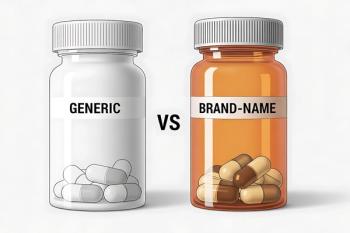
Researchers assess the differences in out-of-pocket spending on brand name compared with generic medication.

Starting with Exelixis’ condition on in-house dispensing data, manufacturers are introducing a new approach to 340B claims focused on transparency.
Digital innovation and proactive patient care are converging to transform clinical practice while preserving essential safeguards.

As pouched products increase in popularity, researchers assess their pharmacology, harm-reduction potential, and initiation risk.

Madeline Sutton, MD, MPH, FACOG, joins to discuss risks of HPV infection among women and how pharmacists can improve outcomes in this area.

In part 2, Vanessa Slowey explains the pharmacy industry’s need for due diligence as technology reinforces patient convenience in the 21st century.

Published: February 5th 2026 | Updated: February 20th 2026

Published: August 6th 2024 | Updated: August 20th 2024

November 13th 2025


