

A conversation with Mitchell Barnett, PharmD, MS, professor of pharmaceutical sciences at Texas A&M University, at PQA 2025.
A conversation with Mitchell Barnett, PharmD, MS, professor of pharmaceutical sciences at Texas A&M University, at PQA 2025.
NBC News Medical Analyst Vin Gupta, MD, joins Drug Topics at NCPDP 2025 to discuss the technological evolution of the pharmacy profession.

Attorneys from The Phoenix Law Group joined Drug Topics at NCPDP 2025 to discuss the current state of pharmacy benefit manager reform and where it may end up in the near future.

The NCPDP’s Executive Vice President of Innovation & Standards joins Drug Topics to discuss how AI has been making itself known within the pharmacy profession.

Rick Sage, Executive Vice President of Innovation & Standards at NCPDP, discusses his role and how his team is using innovation to support the pharmacy profession.

Larry King, PharmD, joins Drug Topics at NCPDP 2025 to discuss pharmacy interoperability, changes in its regulations, and how technology will fall into place within the data infrastructure.

In part 3 of our interview with Vin Gupta, MD, he discusses pharmacists’ role in remote patient care amid a growing technological infrastructure.

In the second part of our interview with Miranda Rochol, she discusses challenges regarding digital prescription solutions and the financial burdens these solutions are designed for pharmacists to overcome.

In her expertise as a leader with the American Pharmacists Association, Brigid Groves, PharmD, MS, provides insights into her work with geographical information systems and maps.

Vin Gupta, MD, discusses trends and perspectives in patient data privacy as well as what a “smart pharmacy” may look like in the near future.
Greg Miller, RPh, discussed the past, present, and future of the Inflation Reduction Act and key insights pharmacists should understand in order to keep up with the legislation.

Cami Agena, Esq, and Candida Ruesga, Esq, discuss pharmacy benefit manager reform by providing insights from their experience as legal partners in complex PBM matters.

Larry King, PharmD, discusses how pharmacy interoperability is working to create collaborative care and get pharmacists “in the game” as he says.

The Summit provides a rare opportunity for professionals to dive deep into emerging healthcare technologies and treatment models.

Vin Gupta, MD, former Chief Medical Officer at Amazon Pharmacy and renowned US medical analyst, discusses pharmacists’ ability to reach communities and address social determinants of health.

Stanley V. Campbell, Jr., CEO of EagleForce Associates, Inc., and Yi Deng, PhD, Senior Vice President of Engineering at EagleForce, discuss the basics of AI and how it’s assisting with compliance.

Miranda Rochol, Senior Vice President of Provider Solutions at Prescryptive Health, discusses digital prescription solutions and how they are turning patients into consumers.

Brigid Groves, PharmD, MS, Vice President of Professional Affairs at APhA, discusses how the pharmacist’s role in immunization has adapted in recent history.

Stanley V. Campbell, Jr., CEO of EagleForce Associates, Inc., and Yi Deng, PhD, Senior Vice President of Engineering at EagleForce, explore real-world examples of AI giving time back to pharmacists.

Stanley V. Campbell, Jr., CEO of EagleForce Associates, Inc., and Yi Deng, PhD, Senior Vice President of Engineering at EagleForce, discuss how AI is being used to benefit patients.



Sarah Thomas and David Skomo of HealthDyne discuss some of the most useful innovations that have been helpful for pharmacies.

Casey Koch, PharmD, MBA, BCACP, clinical pharmacy coordinator at SelectHealth discusses how pharmacists can reduce patient burden.

Douglas Hoey, CEO of NCPA, discusses what pharmacies can do to increase revenue and avoid shutting their doors.

A conversation with Sarah Thomas and David Skomo of HealthDyne at Asembia’s AXS25 Summit.

The Inflation Reduction Act's drug price negotiations could lead to reimbursement complexities, potential pharmacy closures, and reduced patient access to medications, particularly specialty drugs.
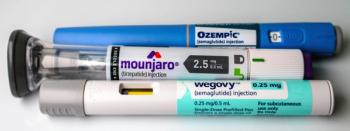
Although the market is expected to continue to become more popular, compounding pharmacies will no longer be allowed to manufacture these medications, as shortages have been listed as resolved.

A conversation with Mark Garofoli, PharmD, MBA, BCGP, CPE, CTTS, clinical assistant professor and director of experiential learning at West Virginia University School of Pharmacy, at AAP 2025.