

Opinion|Videos|September 22, 2026
COVID-19 Vaccine Hesitancy in 2026: How Attitudes Have Shifted
Author(s)Jeffery Goad, PharmD, MPH, Marcel Curlin, MD
COVID-19 vaccine resistance has shifted from acute ideological opposition toward broader apathy, a trend now spilling into declining measles vaccination and eroding herd protection.
Advertisement
Episodes in this series
In "COVID-19 Vaccine Hesitancy in 2026: How Attitudes Have Shifted," the panel examines how vaccine hesitancy has evolved since the 2021-2022 rollout.
Dr. Jeff Goad shifts the conversation to how pharmacists experience hesitancy in daily practice, from specific safety questions to a general sense among some patients that they are simply done with COVID-19 vaccines. He asks Curlin how today's hesitancy compares with the intense resistance seen during the 2021-2022 rollout.
Curlin describes a clear evolution. The early pandemic produced an abrupt, almost ideological form of resistance narrowly focused on the COVID-19 vaccine specifically, he explains. As the acute public health emergency faded, that sharply divided camp mentality softened. In its place, Curlin observes, a broader apathy toward vaccination has emerged. He points to a concrete example from his own institution: flu vaccine uptake among Oregon Health & Science University employees once reached 90 to 95 percent, but has since dropped significantly. Curlin notes that other universities report the same pattern, driven not by lower flu risk but by general vaccine fatigue.
A smaller, more entrenched minority still holds firmly anti-vaccine beliefs, Curlin adds, often drawing on a wide range of information sources of varying quality. He notes with concern that vaccine skepticism has crept into political leadership in some cases, transforming what should be a scientific conversation into a politicized one.
Goad connects this trend to consequences beyond COVID-19. He notes that declining vaccination rates have contributed to a resurgence of vaccine-preventable diseases like measles. Curlin agrees, explaining that the United States is likely to lose its measles elimination certification as vaccination rates continue slipping. Goad cites data showing kindergarten vaccination rates have fallen to roughly 92 percent, below the 95 percent threshold generally needed to prevent sustained outbreaks. Both physicians agree this spillover effect extends well beyond COVID-19 into the broader landscape of vaccine-preventable illness.
Up next, in "COVID-19 Vaccination vs. Natural Infection: Weighing the Real Risks," the experts weigh the real risks of natural infection against vaccination.
Advertisement
Related to this article

Observed by APhA and ASHP since 2023, bipartisan support has garnered to give pharmacy workforce suicide awareness its own federally recognized day.

Atogepant reduced migraine days during the perimenstrual period, positioning the medication as a potential first treatment option for the condition.

Chad Worz, PharmD, BCGP, FASCP, discusses the Main Street Pharmacy Access Act, a revolutionary pharmacy-focused bill moving through Congress.

Data show that commercially and Medicaid-insured children with chronic or immunocompromising conditions incur 2- to 3-fold higher costs.

Researchers assess the neurological outcomes of over 200,000 children exposed to COVID-19 before birth.

Results show consistent improvements in wakefulness, cataplexy, and quality of life with oveporexton for patients with narcolepsy.
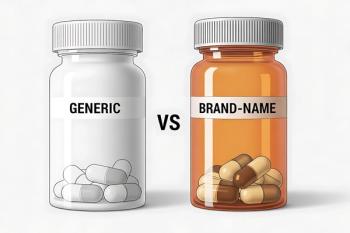
Researchers assess the differences in out-of-pocket spending on brand name compared with generic medication.

Practical takeaways to improve real‑world clinic outcomes for PAINWeek 2026.
Advertisement
Advertisement
Trending on Drug Topics
1
Johnson & Johnson Next Major Drugmaker to Require 340B Claims Data
2
Generic Drug Costs Burdening Patients as Much as Brand Name Options
3
How the Main Street Pharmacy Access Act Advances Pharmacist Provider Status
4
Pharmacy Workforce Suicide Awareness Day Aiming for Federal Recognition
5