

Opinion|Videos|September 8, 2026
How mRNA and Protein-Based COVID-19 Vaccines Work
Author(s)Jeffery Goad, PharmD, MPH, Marcel Curlin, MD
mRNA and protein-based COVID-19 vaccines reach the same immune target through different biological routes, a distinction pharmacists can use to guide product selection for patients.
Advertisement
Episodes in this series
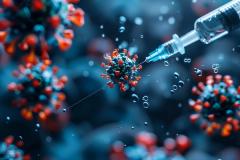
In "How mRNA and Protein-Based COVID-19 Vaccines Work," Dr. Curlin walks through how mRNA and protein-based COVID-19 vaccines each train the immune system.
Dr. Jeff Goad asks Curlin to walk through the COVID-19 vaccines currently available, setting up a discussion of how pharmacists might match specific products to specific patients. Curlin explains that the available vaccines fall into two broad categories: mRNA vaccines and protein-based vaccines. Pfizer and Moderna each make an mRNA vaccine, he says, while Novavax's protein-based vaccine is distributed through a partnership with Sanofi. All three vaccines target the same viral component, Curlin notes, but they deliver that target to the immune system differently.
Curlin describes the mRNA mechanism in detail. The vaccine's genetic material, carried inside a lipid nanoparticle, is injected into the arm and taken up by antigen-presenting cells and muscle cells. Those cells then use the RNA's instructions to manufacture the spike protein themselves. Antigen-presenting cells display that self-made protein to the immune system, training it to recognize the real virus later. The RNA itself degrades within days, Curlin emphasizes. It never becomes DNA, never integrates into the genome, and does not persist in the body. He adds that the lipid nanoparticle carrying the RNA also functions as its own adjuvant, helping prompt a stronger immune response.
The protein-based vaccine works differently, Curlin explains. It delivers a preformed spike protein directly, rather than instructing cells to manufacture it. Because protein alone is only weakly immunogenic, manufacturers add a saponin-based adjuvant to boost the immune response, achieving an effect similar to the mRNA platform's built-in adjuvant. Curlin also discusses mNEXSPIKE, Moderna's newer vaccine, which narrows its target to the regions of the spike protein believed most relevant to immune protection. Whether that more targeted approach improves real-world protection remains an open question, Curlin says, and side-effect profiles are not expected to differ meaningfully. He expects clearer answers as real-world data accumulates over the next year or two.
Up next, in "Vaccine Messaging That Resonates With Hesitant Pharmacy Patients," the conversation shifts to the specific messages that resonate with hesitant patients at the counter.
Advertisement
Related to this article

To guide public health and vaccination strategies, researchers assessed a variety of factors regarding community-acquired pneumonia and its causes.

Highlighting the clinical impact of the pharmacy profession, we caught up with pharmacists of various types to get their perspectives on the evolution of pharmacy.

A newly erected Women’s Health Division within NIH will work in tandem with the Office of Research on Women’s Health.
Rita King, CEO of MethodSense, provides her expertise on the integration of AI in medical devices and key developments for pharmacists as the technology evolves.

Harini Bupathi, Esq, explains why pharmacies need to continue prioritizing PBM relationships despite rapid legislative change.

Researchers assessed the extent of which vaccine fatigue translates to reduced engagement and adherence among patients.

Brianne Porter, PharmD, MS, explores how pharmacists can deliver care to a population of women experiencing life-altering symptoms of urinary incontinence.
AJ Barbarito, Esq, explains how ERISA and Medicare Part D preemption limit state PBM laws and why a private right of action may be the most effective path forward.
Advertisement
Advertisement
Trending on Drug Topics
1
Pharmacist Roles, Risks in Guiding AI-Enabled Medical Device Use
2
FDA Approves Bepirovirsen Injection to Treat Chronic Hepatitis B
3
American Pharmacists Month: The Importance of Pharmacy-PBM Relationships
4
Q&A: Why Enforcement Is the Weak Link in State PBM Reform | NCPA 2026
5