

Opinion|Videos|September 22, 2026
COVID-19 Vaccination vs. Natural Infection: Weighing the Real Risks
Author(s)Jeffery Goad, PharmD, MPH, Marcel Curlin, MD
Vaccination and natural infection both train the immune system, but only one route carries the added risk of long COVID and lasting organ damage.
Advertisement
Episodes in this series
"COVID-19 Vaccination vs. Natural Infection: Weighing the Real Risks" weighs whether a prior COVID-19 infection makes vaccination unnecessary.
Building on the discussion of vaccine safety and durability, Dr. Jeff Goad raises a question pharmacists hear often: if a patient already had COVID-19, do they still need the vaccine? He asks Curlin to compare the protection gained from natural infection with that gained from vaccination.
Curlin explains that both infection and vaccination prompt the immune system to mount a response. In an ideal world, he says, avoiding COVID-19 entirely would be preferable, but that is rarely realistic. People still need to shop for food and participate in public life, Curlin notes, and COVID-19 remains a highly efficient spreader. Given how likely exposure eventually becomes, he argues it is far better to have vaccine-induced protection in place before that exposure happens, rather than relying on natural infection alone.
Curlin then details what natural infection can cost some patients. A young, healthy person might experience COVID-19 as mildly as a common cold, he acknowledges. Others, however, develop long COVID, a condition that can persist for months or years. He reminds viewers that the virus is not limited to the respiratory tract. It can also affect endothelial cells lining blood vessels, along with the heart, kidneys, and brain, producing a wide range of lasting complications. Patients in higher-risk health categories, due to age or underlying conditions, face particular danger from these outcomes, Curlin adds.
Goad emphasizes a key clarification for patients worried specifically about long COVID: the vaccine does not cause it. Only the underlying disease does, he says, and that distinction matters for patients weighing their options. Curlin agrees, reinforcing that vaccination first, followed by any eventual exposure, gives patients the best chance of avoiding these more severe and lasting consequences of infection.
The next episode in this series, "Normal vs. Concerning COVID-19 Vaccine Reactions: A Pharmacist's Guide," helps pharmacists tell a normal vaccine reaction from one that needs medical attention.
Advertisement
Related to this article

Observed by APhA and ASHP since 2023, bipartisan support has garnered to give pharmacy workforce suicide awareness its own federally recognized day.

Atogepant reduced migraine days during the perimenstrual period, positioning the medication as a potential first treatment option for the condition.

Chad Worz, PharmD, BCGP, FASCP, discusses the Main Street Pharmacy Access Act, a revolutionary pharmacy-focused bill moving through Congress.

Data show that commercially and Medicaid-insured children with chronic or immunocompromising conditions incur 2- to 3-fold higher costs.

Researchers assess the neurological outcomes of over 200,000 children exposed to COVID-19 before birth.

Results show consistent improvements in wakefulness, cataplexy, and quality of life with oveporexton for patients with narcolepsy.
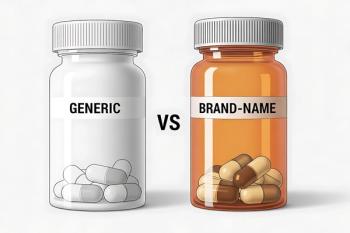
Researchers assess the differences in out-of-pocket spending on brand name compared with generic medication.

Practical takeaways to improve real‑world clinic outcomes for PAINWeek 2026.
Advertisement
Advertisement
Trending on Drug Topics
1
Johnson & Johnson Next Major Drugmaker to Require 340B Claims Data
2
Generic Drug Costs Burdening Patients as Much as Brand Name Options
3
How the Main Street Pharmacy Access Act Advances Pharmacist Provider Status
4
Pharmacy Workforce Suicide Awareness Day Aiming for Federal Recognition
5