

The FDA expands Auvelity for Alzheimer-related agitation, offering a first nonantipsychotic option backed by trials.
The FDA expands Auvelity for Alzheimer-related agitation, offering a first nonantipsychotic option backed by trials.

Utilizing colleges and schools of pharmacy, researchers explorensolutions to the growing challenges affecting community pharmacy.

Among community pharmacies and their patients, researchers explore the power of protected learning time for improving services and outcomes.

With its capabilities improving rapidly in the health care space, technology and pharmacy experts discuss AI’s future place in pharmacy practice as further developments are released.

These discussions focused on gaps in artificial intelligence, community-based advanced therapy, and demands of federal drug price negotiations.

An exploration of community pharmacists’ perceptions of e-pharmacy, assessing whether they believe it’s a threat or benefit.

FDA approves Caplyta to prevent schizophrenia relapse, cutting risk 63% with a stable metabolic profile.

Digital specialty pharmacy, AI-driven intent, and mega-blockbuster drugs reshape patient engagement, access, and long-term adherence strategies.

In adult patients at least 50 years old, researchers estimated lifetime costs and health outcomes of the 23-valent pneumococcal polysaccharide vaccine.

In part 2 of our World Immunization Week interview with Nathan Ott, PharmD, he discusses the power of collaboration and continuing education in boosting vaccine awareness.

Pharmacy benefit manager reforms, gene therapy scale-up, artificial trust risks, and more reshape specialty pharmacy.

The adeno-associated virus (AAV) vector-based gene therapy lunsotogene parvec-cwha received approval through the FDA Commissioner’s National Priority Voucher pilot program.

The drug’s indication for uncontrolled chronic spontaneous urticaria is the first biologic medicine of its kind, specifically explored amongst children 2 to 11 years old.

As the “peptide craze” fuels a surge in unregulated vendors, pharmacists must serve as critical navigators to steer patients toward safe, pharmaceutical-grade alternatives.

GSK’s investigational drug for liver treatment was given fast-track designations to improve access in what the FDA considers a significant unmet medical need.
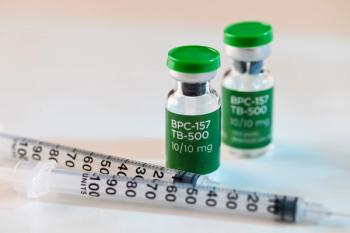
Following an FDA announcement on its deeper look into peptide restrictions, Christopher Shade, PhD, joined to provide insights on their functions for metabolic health and more.

Researchers find Reddit posts provides a look at the real-world adverse effects of glucagon-like peptide-1 receptor agonists.

Pharmacists have the expertise to address acute and chronic pain distinctions, missed-dose protocols, tolerance and safety insights, and multimodal, non-pharmacological strategies for pain.

The 2026 guidance emphasizes that selecting newer and innovative agents should occur early, dependent on comorbidities of the patient.

The FDA’s Pharmacy Compounding Advisory Committee will meet in late July of 2026 to convene on peptides and their inclusion on the 503A Bulk Drug Substances List.

A head-to-head trial shows a protein-based COVID-19 booster causes fewer adverse effects, boosting patient preference and aiding pharmacists.

Under a 12-month agreement, the Utah authorities granted companies permission to use generative AI to authorize medication refills for state residents.

This proposed rule builds on previous CMS guidance from 2020 and 2024.

FDA expands Tzield use to age 1 year to delay stage 3 type 1 diabetes, enabling earlier immune intervention.

New research examines what drives, or hinders, pharmacists when guiding patients through self-medication decisions for minor ailments like cold and flu.

In an exploration of pharmacists’ self-efficacy, researchers explored medication counseling outcomes for older adults across various languages.
Cloned pharmacy sites and fake GLP-1 weight-loss pens surge online, prompting federal crackdowns and urgent safety warnings for patients.

FDA approves Idvynso, a 2-drug HIV switch option for suppressed adults, supporting simpler care as people age with HIV and manage multiple conditions.

Researchers conduct an exploration of e-prescription challenges and potential across pharmacies in Germany.

The executive order mandates national priority vouchers for psychedelic drugs that have received breakthrough therapy designations.