Nicole Pezzino, PharmD, BCACP, BC-ADM, CDCES, details how pharmacies can utilize the booming GLP-1 medication class for greater revenue opportunities.
The FDA’s Pharmacy Compounding Advisory Committee will meet in late July of 2026 to convene on peptides and their inclusion on the 503A Bulk Drug Substances List.
Following recent comments from the US Department of Health and Human Services (HHS) Secretary Robert F. Kennedy Jr., the FDA announced its plan to explore easing compounding restrictions for 7 separate peptide molecules.1,2
“Peptides are signaling molecules that biology uses to turn on and off different processes. [They are] real potent in the way that it signals them,” Christopher Shade, PhD, CEO and founder of Quicksilver Scientific, told Drug Topics®. “We’ve been going after drugs that sort of help you stimulate these processes, but the peptides go right in. They might turn on a healing response like Ozempic (semaglutide) does.”
An FDA advisory panel is set to meet in late July 2026 to discuss 7 peptides that are currently restricted due to safety concerns, according to
The move comes as RFK Jr. advocates for expanded access, arguing that this regulation will shift demand away from the black market. Kennedy, a self-described
READ MORE:
For pharmacists, this review represents a potentially significant shift in the regulatory landscape for traditional pharmacy compounding under Section 503A of the Federal Food, Drug, and Cosmetic Act.3,4
Currently, many of these substances fall into Category 2, which identifies them as posing potential safety risks and excludes them from the enforcement discretion typically granted to substances under evaluation in Category 1, according to Buchanan Ingersoll & Rooney PC.3
“All of a sudden, in functional and regenerative medicine, we got these tools. Probably the strongest tools before them were hormones; something that really works on a high level in the body and creates a cascade of reactions downstream that do things,” continued Shade. “Whereas, we used to plug in downstream and try to affect these. They're super powerful, and then there's ones that make growth hormone secretion, and some of them are super safe if you get them made right.”
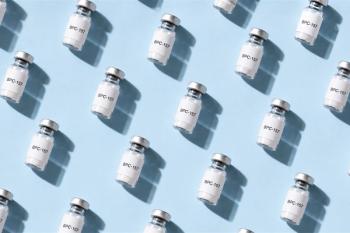
The upcoming Pharmacy Compounding Advisory Committee meeting, scheduled for July 23 to 24, 2026, will specifically evaluate whether substances like BPC-157, KPV, TB-500, and MOTs-C meet the criteria for inclusion on the 503A Bulk Drug Substances List.4
The second day of the meeting will focus on emideltide, also known as delta sleep-inducing peptide, along with Semax and Epitalon. These signaling molecules have gained immense popularity for treating conditions ranging from obesity and insomnia to inflammatory wounds—yet many have not undergone clinical trials to confirm human safety.1,4
This “peptide craze” has been heavily influenced by the success of glucagon-like peptide-1 (GLP-1) medications like Ozempic, which normalized self-injection for many consumers. Consequently, the peptide market already accounts for $60 billion and could triple in size over the next 5 years if federal rules are relaxed.2,5
“The GLP-1s; you can’t underrate them. There’s going to be a major shift in long-term chronic illness care,” Shade said. “Things like diabetes and all the complications that come from that, metabolic dysfunction, are going to disappear quite a bit as a result. Think back 20 years ago—only diabetics were self-injecting. Now, everybody's doing it.”
Despite the market boom, scientific and medical experts remain cautious.
Paul Knoepfler, PhD, of the UC Davis School of Medicine, noted that a lack of data makes it difficult to identify all possible risks. Others, like Peter Lurie, MD, president and executive director at the Center for Science in the Public Interest, suggest that bypassing proper drug approval paths poses a profound threat to the FDA’s vetting system.1,2
There are also concerns about impurities in gray-market products, where contaminants like endotoxins can cause inflammation or even anaphylactic reactions. Eric Topol, MD, of Scripps Research called for more data-driven oversight, noting that some peptides may increase health risks such as cancer due to how they stimulate hormone production.5
Pharmacists must also navigate strict FDA enforcement. The agency recently clarified that adding an ingredient like vitamin B12 to an existing formulation, such as semaglutide, does not exempt a product from being treated as a copy of a commercially available drug.3
Furthermore, the agency intends to act if a pharmacy compounds more than 4 prescriptions per month of such products. Although some industry figures advocate for treating naturally occurring peptides as supplements, the FDA continues to weigh the risks of hormone stimulation and potential systemic effects.3,5
Experts remind stakeholders that even if the advisory panel votes in favor of these peptides, the subsequent rulemaking process will be a protracted one. As the July 2026 meeting approaches, pharmacists should remain diligent in sourcing high-quality materials and staying updated on the evolving 503A Bulk List.2,4
“We’ll see what the FDA says about some of the ones that are natural in the body being supplements and how we deliver them,” concluded Shade. “It's going to be an exciting time. Overall, I think peptides are the best thing that’s happened to medicine in decades.”
READ MORE:
Ready to impress your pharmacy colleagues with the latest drug information, industry trends, and patient care tips? Sign up today for our