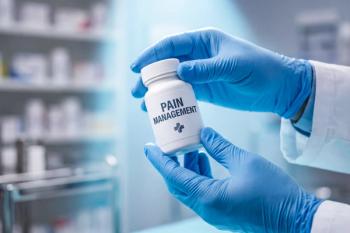
Pharmacist pain clinics typically focus on comprehensive medication management involving the entire patient scenario.
Pharmacists have the expertise to address acute and chronic pain distinctions, missed-dose protocols, tolerance and safety insights, and multimodal, non-pharmacological strategies for pain.
Pain management remains one of the most essential and frequent challenges in health care, yet it is also one of the most profoundly individualized. From distinguishing between protective acute pain and the persistent nature of chronic pain to navigating the nuances of neuropathic or inflammatory mechanisms, providers and patients face an incredibly complex and evolving clinical landscape.
Pharmacists, however, have emerged as vital members of the interprofessional pain management team—positioned to match the right therapy with the right patient and provide the education necessary to navigate a symphony of pharmacological and non-pharmacological options.
Despite the vast array of available analgesics, significant gaps remain regarding patient understanding of medication tolerance, the risks of combining drugs, and the integration of lifestyle-based strategies. Mark Garofoli, PharmD, BCGP, CPE, CTTS, clinical assistant professor and director of experiential learning at the West Virginia University School of Pharmacy, and leading pharmacy expert in pain management, shares his insights on navigating these clinical “danger zones” and moving toward a multimodal approach that prioritizes patient safety and functional goals.
Acute pain is your body’s alarm system. It shows up fast, usually tied to a clear cause—think sprained ankle, paper cut, post-op pain, etc—and it means business. “Hey! Something’s wrong—fix it!” It’s short-lived and typically resolves as healing occurs.
Chronic pain, on the other hand, is that alarm that just won’t shut off. It persists beyond normal healing time—generally 3 months or longer—and may stick around even when the original injury is long gone. At this point, pain is less about tissue damage and more about nervous system sensitization; the system itself is now part of the problem.
The bottom line is that acute pain is often protective and temporary, while chronic pain is often persistent and often maladaptive. In other words, acute pain is a helpful guest, while chronic pain is the one who moved in, ate your food, and refuses to leave.
Here’s the reality that we all need to appreciate: There is no universal “best” medication for a given type of pain. Pain is wildly individual—different mechanisms, different patients, different goals. What works like magic for one person might flop for another, yet there are some consistencies of course.
Treating pain isn’t a fast-food combo where you just “supersize” the over-the-counter ibuprofen. It’s more like building a playlist; you match the therapy to the type of pain and the patient. For inflammatory pain, medications targeting inflammation can shine. Neuropathic pain? You’re often reaching for agents that calm nerve signaling.
And for musculoskeletal pain, maybe mix [in] options and formulations, plus non-pharmacological strategies.
The “best” choice depends on the whole patient—age, comorbidities, other meds, risks, and goals of care. That’s why guidelines often push a multimodal approach instead of relying on a single all-star medication.
The bottom line is that there is no single “best” medication, rather only the best fit for the patient and the pain type. Mechanism matters more than marketing and, often, the winning strategy is a team effort, not a solo act. The “best” pain medication isn’t a celebrity; it’s a well-cast ensemble.
The unfortunate missed dose dilemma; happens to the best of us, as we’re all human.
There’s no single universal rule here, but there is a very reliable game plan. In most cases, if a patient misses a dose of their pain medication, the advice is to take it when you remember, unless it’s close to the next scheduled dose. If it’s close, skip the missed one and get back on track. The golden rule? Don’t double up to “catch up.” That’s how side effects come crashing into the party. Missing a dose isn’t the end of the world, but doubling up might make it one. Stick to the plan and [don’t] panic.
This is the “is my medication losing its mojo?” question.
Tolerance means the body has adapted to a medication over time, whether pharmacokinetically or pharmacodynamically: The same dose doesn’t deliver the same level of pain relief it once did. Patients might notice their pain creeping back sooner between doses or that the medication just doesn’t work like it used to.
The caveat is that not every increase in pain equals tolerance. The underlying condition could be changing, new pain could be developing, or even stress and sleep can shift how pain is experienced. It’s not always the medication; it’s sometimes the whole picture.
Tolerance is different from dependence and very different from addiction. Tolerance is a normal, expected physiologic response with many medications, especially over time. If your medication feels like it’s going from a strong cup of coffee to decaf, something’s changing, but you’ve got to figure out why before refilling the cup.
Anything the slows down our central nervous system (CNS) is a concern, yet utilizing multiple CNS depressants is stacking the deck for side effects—even respiratory depression—drug interactions, falls, confusion; you name it.
However, here’s a key clinical mindset: It’s not always “never combine,” but it is always “combine with extreme caution and clear justification.” Sometimes co-prescribing is warranted, but it should come with monitoring, dosage considerations, and patient education.
Opioids alone are a strong player, but when you start adding teammates that all slow things down, you better make sure they’re not all trying to hit the brakes at the same time.
Pain care is so much bigger than what’s in the pill bottle. If medications are the only treatment utilized, you’re playing pain management on “hard mode.” The real magic often happens when you bring in non-pharmacological strategies to round out the plan. Physical therapy, occupational therapy, cognitive behavioral therapy, stress management, sleep optimization, diet, exercise, heat, ice, while rounding out the interprofessional team with dietitians, interventionalists, chiropractors, massage therapists—[it’s] all hands on deck.
[This is] all while remembering that zero pain is not (always) the goal, rather function improvement, quality of life, and pain improvement. Medications might be the lead guitar, but the full band—movement, mindset, sleep, and lifestyle—is what makes the music actually sound good.
Pain management is a journey, not a destination.
Effective pain management extends well beyond finding a “holy grail” medication for treatment; it requires a well-cast ensemble of therapies tailored to the specific mechanisms of a patient’s pain. As the therapeutic landscape continues to move toward a multimodal approach—incorporating movement, mindset, and sleep alongside medications—pharmacists must remain vigilant in monitoring for tolerance and the risks of polypharmacy, while also communicating clearly about realistic expectations.
Optimizing pain care is less about achieving zero pain and more about building the interprofessional relationships and strategies that allow patients to improve their function and quality of life with confidence.
READ MORE:
Don’t get left behind: Sign up today for our