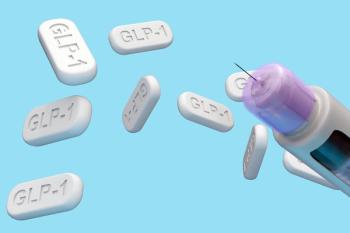
Nicole Pezzino, PharmD, BCACP, BC-ADM, CDCES, details how pharmacies can utilize the booming GLP-1 medication class for greater revenue opportunities.
Emerging data show glucagon-like peptide-1 receptor agonists may raise the risk of certain autoimmune diseases compared with other diabetes drugs.
Glucagon-like peptide-1 receptor agonists (GLP-1RA), including semaglutide and tirzepatide, have become mainstays of type 2 diabetes (T2D) and obesity treatment, but their effects on autoimmune disease risk remain incompletely understood. Two new comparative studies suggest that, relative to other antidiabetic drug classes, GLP-1RA use may be associated with a higher incidence of several autoimmune conditions.1,2
At the same time, a separate analysis presented at the American Heart Association (AHA) study found that GLP-1RA treatment was linked to fewer serious cardiac events among patients who already have both obesity and an autoimmune disease.3
According to PubMed, a study published in ACR Open Rheumatology used emulated target trials built from electronic health record data across 152 health care organizations in the TriNetX network to compare autoimmune disease incidence among more than 300,000 matched patients with T2D treated with dipeptidyl peptidase 4 inhibitors (DPP-4i), GLP-1RA, or sodium-glucose cotransporter-2 inhibitors (SGLT2i).1
Compared with GLP-1RA, DPP-4i treatment was associated with lower risk of psoriasis (hazard ratio [HR], 0.79; 95% CI, 0.70-0.85), psoriatic arthritis (HR, 0.65; 95% CI, 0.53-0.79), and autoimmune thyroiditis (HR, 0.68; 95% CI, 0.59-0.76) but a higher risk of dermatomyositis (HR, 2.18; 95% CI, 1.24-3.53) and bullous pemphigoid (HR, 1.78; 95% CI, 1.24-2.46). No significant differences in autoimmune disease risk were found between GLP-1RA and SGLT2i.1
A second retrospective cohort study, also using TriNetX data, took a similarly rigorous approach and reached a partly consistent conclusion. Using an active-comparator, new-user design, researchers screened 4,841,560 adults with T2D from the TriNetX US Collaborative Network between January 1, 2015, and December 31, 2022, then excluded anyone with a pre-existing autoimmune condition, cancer, or transplant history before arriving at 412,021 GLP-1RA initiators and 383,415 DPP-4i initiators.2
After 1:1 propensity score matching produced 290,770 well-balanced patients per group, patients were followed for up to 8 years (mean follow-up, 3.2 years for the GLP-1RA group and 4.0 years for the DPP-4i group). GLP-1RA use was associated with significantly higher risk of ulcerative colitis (HR, 1.11; 95% CI, 1.04-1.19), rheumatoid arthritis (HR, 1.08; 95% CI, 1.03-1.12), autoimmune thyroiditis (HR, 1.30; 95% CI, 1.24-1.38), ankylosing spondylitis (HR, 1.30; 95% CI, 1.13-1.51), and psoriasis (HR, 1.17; 95% CI, 1.12-1.22), compared with DPP-4i. No significant differences emerged for Crohn disease, celiac disease, autoimmune hepatitis, systemic lupus erythematosus, or myasthenia gravis, and the elevated risks held up consistently across subgroups defined by age, sex, body mass index, and estimated glomerular filtration rate.2
To test the robustness of these findings, the investigators ran positive and negative control analyses. GLP-1RA use showed the expected lower risk of major adverse cardiovascular events, all-cause mortality, and pemphigoid (positive controls), while showing no difference in skin malignancy, cataracts, or aortic aneurysm and dissection (negative controls), supporting the validity of the study design. The association held across 7 additional sensitivity analyses, including extended follow-up lag times, alternative propensity-matching models, and a per-treatment design, and all 3 individual GLP-1RA drugs studied—semaglutide, liraglutide, and dulaglutide—showed elevated autoimmune disease risk versus DPP-4i, suggesting a class effect rather than a single-drug signal.2
The study authors proposed that disruption of gut microbiota by GLP-1RAs may partly explain the gastrointestinal and skin findings through the gut-skin axis, though they cautioned that the retrospective design cannot establish causation and that absolute incidence remained low overall—under 2% for most conditions studied, and 3% to 4% for rheumatoid arthritis and psoriasis, over the 8-year follow-up.2
Notably, both studies point in the same direction for psoriasis and autoimmune thyroiditis risk, with GLP-1RA use associated with higher relative risk than DPP-4i in each case, even though the 2 research groups used different patient populations, comparator designs, and time frames.1,2
Rather than the risk of developing a new autoimmune disease, the AHA study evaluated cardiovascular outcomes among more than 26,000 adults who already had both obesity and at least 1 autoimmune disease. Using more than 10 years of electronic health record data from the OneFlorida+ network, researchers found that GLP-1RA use was associated with a 17% lower risk of venous thromboembolism, a 31% lower risk of pulmonary embolism, a 21% lower likelihood of emergency department visits, and a 44% decreased risk of death compared with nonuse.3
"This is a high-risk population, and historically we've had limited data to guide treatment decisions," said Amy Sheer, MD, MPH, lead author and director of the Obesity Medicine Fellowship program at the University of Florida, in a news release.3 "In this real-world analysis, we found a consistent signal toward fewer serious complications, including blood clots, and lower mortality among patients treated with GLP-1RA."
Fatima Cody Stanford, MD, MPH, MPA, MBA, FAHA, of Massachusetts General Hospital and Harvard Medical School, who was not involved in the research, called the 44% mortality reduction "a striking finding that demands our attention," adding that the results "reinforce what many of us have suspected clinically—that the benefits of GLP-1 receptor agonists extend well beyond blood sugar control and weight loss." The AHA noted that the analysis cannot establish cause and effect and that weight loss or improved glucose control may have contributed to the observed benefits.3
Taken together, the studies suggest that GLP-1RA's relationship with autoimmune disease is neither uniformly protective nor uniformly harmful, and the answer may depend on which autoimmune condition, which comparator drug, and which outcome—new disease onset versus complications of existing disease—is being examined.
For pharmacists, this reinforces the value of medication reconciliation and monitoring in patients with diabetes or obesity who have, or are at risk for, autoimmune disease. Patients starting a GLP-1RA who have a personal or family history of autoimmune thyroiditis, psoriasis, psoriatic arthritis, ankylosing spondylitis, or inflammatory bowel disease may benefit from closer follow-up. Because the elevated risk in the Journal of Autoimmunity analysis appeared consistently across semaglutide, liraglutide, and dulaglutide, this monitoring consideration is reasonable to apply broadly across the GLP-1RA class rather than to any single agent.2
At the same time, patients with both obesity and an established autoimmune disease may be reasonable candidates for the cardiovascular and mortality benefits observed in the AHA-supported analysis. Pharmacists counseling these patients should emphasize that GLP-1RAs remain approved only for T2D and weight management, not for the direct treatment or prevention of autoimmune disease, that the absolute risk increases identified so far are small, and that any new or worsening autoimmune symptoms should be discussed with the prescribing clinician.2,3,4