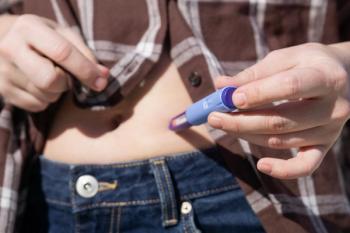
The LATA trial found long-acting cabotegravir–rilpivirine is better than daily oral therapy at keeping adolescents virologically suppressed.
Results from a trial show injectable cabotegravir plus rilpivirine reduced viral rebound compared with daily oral therapy.
Cabotegravir plus rilpivirine long-acting (CAB+RPV LA) injectable (Cabenuva), dosed every 2 months, demonstrated superiority to daily oral antiretroviral therapy in adolescents living with HIV, according to week 96 results from the LATA trial presented at the 26th International AIDS Conference in Rio de Janeiro, Brazil.1
The trial, led by University College London, enrolled 476 virologically suppressed adolescents aged 12 to 19 years across Kenya, South Africa, Uganda, and Zimbabwe.1
In the LATA (
Among adolescents receiving the injectable regimen, 94% (215 of 228) reported that the injections were much easier to take than daily oral therapy. ViiV Healthcare noted that the results contribute evidence in an adolescent population in which adherence and retention in care can be challenging.1
“The data presented at AIDS 2026 underscore the depth and breadth of evidence ViiV Healthcare has generated for long-acting injectables across HIV treatment and prevention. With OPERA, real-world evidence from nearly 6,800 adults in routine care shows Cabenuva maintained high and comparable virologic suppression to daily oral therapy, helping us better understand how it performs outside clinical trials and supports people over time,” Jean van Wyk, MBChB, MFPM, chief medical officer at ViiV Healthcare, said in a news release.1
The LATA findings were presented alongside new real-world data from the US-based OPERA cohort, which showed CAB+RPV LA dosed every 2 months maintained virologic suppression comparable to daily oral bictegravir/emtricitabine/tenofovir alafenamide (BIC/FTC/TAF) in nearly 6800 virologically suppressed adults. In that analysis, 89% (3655 of 4095) of individuals receiving CAB+RPV LA and 83% (2239 of 2699) receiving BIC/FTC/TAF had viral loads below 50 copies/mL at a median follow-up of 15 and 22 months, respectively.1
The LATA results follow week 96 and end-of-study findings from the phase 1/2 IMPAACT 2017 (MOCHA;
That study, the first to evaluate a complete injectable long-acting regimen in adolescents, found that 94.4% (136 of 144) of virologically suppressed adolescents aged 12 to younger than 18 years who switched from daily oral therapy to CAB+RPV LA every 2 months maintained viral suppression at week 96, with no confirmed virologic failures. More than 97% of participants preferred long-acting injections over daily oral antiretroviral therapy at every week evaluated, reaching 100% preference among those who expressed a preference at week 96.2
"Every adolescent who expressed a preference after almost 2 years of treatment chose the injectable regimen over daily pills,” Aditya Gaur, MD, of St. Jude Children's Research Hospital and co-lead investigator of IMPAACT 2017, said in a news release.2
In IMPAACT 2017, 42% (60 of 144) of adolescents experienced a drug-related adverse event, most commonly cough, headache, and upper respiratory tract infections. Among 142 participants who received at least 1 injection, 37% (52 of 142) reported injection site reactions, which were mostly mild to moderate pain that typically resolved within 1 week.2
A companion study, IMPAACT 2036 (CRAYON), reported interim pharmacokinetic and safety data extending the regimen to children as young as 2 years and weighing as little as 10 kg, with plasma concentrations similar to those seen in adolescents and adults.2
Cabotegravir plus rilpivirine long-acting is indicated as a complete regimen to replace an existing antiretroviral regimen in adults and adolescents 12 years of age and older weighing at least 35 kg who are virologically suppressed, have no history of treatment failure, and have no known or suspected resistance to either component.3
According to the FDA-approved prescribing information, the most common adverse reactions reported in at least 2% of subjects were injection site reactions, pyrexia, fatigue, headache, musculoskeletal pain, nausea, sleep disorders, dizziness, and rash.3
Because cabotegravir and rilpivirine may remain in systemic circulation for up to 12 months or longer after the final injection, the label emphasizes that patients must be transitioned to an alternative, fully suppressive antiretroviral regimen no later than 1 month after the final monthly injection or 2 months after the final every-2-month injection to reduce the risk of viral resistance.3
Pharmacists counseling adolescent patients and caregivers should reinforce the importance of adherence to the injection schedule, given the drug's long-acting properties and the potential for resistance with missed or delayed doses. The regimen also carries labeled warnings for hypersensitivity reactions, post-injection reactions, hepatotoxicity, and depressive disorders, all of which warrant prompt clinical evaluation if symptoms arise.3
The convergence of clinical trial and real-world data—from LATA and IMPAACT 2017 in adolescents to OPERA in adults—adds to a growing case that long-acting injectable therapy may help address adherence challenges that are especially pronounced in younger populations living with HIV.