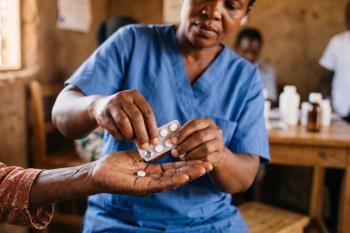
Community pharmacists offer accessible care, improve medication adherence, and build trust through education, vaccination support, and local health leadership.
Pharmacists face burnout and financial strain as PBMs take big cuts, prompting urgent calls for reform to protect patient care and community pharmacies.
Pharmacists are facing a breaking point as burnout, staffing pressures, and an increasingly complicated reimbursement environment converge, according to Parthiv Shah, BSPharm, President, Pharmacists Society of the State of New York (PSSNY).
Shah said the modern practice environment makes it nearly impossible for pharmacists to fully disconnect from work, even when they recognize the need for rest. He noted that “we all need a break. We all need to take a vacation. We all need to spend time with our kids, our parents, and our spouses,” but constant communication through tools like WhatsApp and text messages means “people are constantly trying to take your time.”
To protect their well-being and sustain their role in patient care, Shah argued that pharmacists—especially owners, entrepreneurs, and those in leadership—must rethink how they structure their teams.
“As pharmacists, you need to have your person, second in command, who knows how you like your workflow, can help you with HR, administrative [tasks], payroll, writing checks, making those deposits,” he said. “You can’t do everything.”
Delegating administrative responsibilities, Shah said, is essential not only to reduce personal workload but also to enable pharmacists to participate in professional development. By freeing up time, they can attend national meetings such as conferences. “This is where you’re going to meet, learn, rejuvenate,” he said. Pharmacists, he added, come back from these events with “little golden nuggets” that can be used “to build a better community pharmacy.”
Shah encouraged pharmacists to lean on colleagues, ask how others are managing similar pressures, and explore whether software or outside companies can automate routine tasks. The goal, he said, is to ensure pharmacists spend more time in their “sweet spot,” which he defined as being “in front of patients.”
Even as he underscored the importance of pharmacist-led vaccination efforts—saying that “as pharmacists, we have to vaccinate the population” and that pharmacists are in a “unique spot” to “create” and “provide great value”—Shah warned that the profession is at a critical crossroads because of pharmacy benefit managers (PBMs).
He described how PBMs, which he characterized as middle-management entities similar to companies like Uber, are exerting outsized control over the market and squeezing pharmacies financially.
Using an analogy, Shah explained that if an Uber driver earns $100 in a day, “$30 Uber collects as their fee” and “$70 goes to that driver” for gas, insurance, maintenance, and labor. By contrast, he said, if a pharmacist generates $100 in revenue, “the PBM collects $85 of that $100,” leaving pharmacies frequently losing money. “This is an atrocity. It is so upsetting,” he said.
Shah also stressed that the United States stands alone globally in its reliance on PBMs. “We share this globe, this earth, with 185 countries. We are the only country that has PBMs,” he said. In his view, other advanced countries “have a much better system” of middle management where “everybody thrives and everybody provides care and provides value,” rather than a system where pharmacists “are doing all the work and we’re getting underpaid or less paid.”
Despite his stark assessment, Shah expressed hope that the current crisis will catalyze reform. He said he hopes “some positive change happens” and urged pharmacists to continue advocating for their patients and communities while pushing for a fairer, more sustainable system.