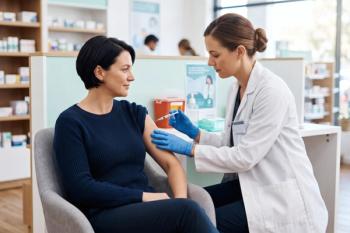
As COVID-19 vaccine guidance shifts, new data suggest vaccinated patients face no greater clot or death risk than with other respiratory infections.
High-income countries gained the most economic value from COVID-19 vaccines but low-income countries got the most per-person vaccinations relative to GDP.
Every dollar spent developing and delivering COVID-19 vaccines returned an estimated $59.70 to $809 in health and economic value in the first year of vaccination (December 2020 to December 2021), according to the first global return-on-investment (ROI) analysis on COVID-19 vaccines published in PLOS Medicine.1
“The role of pharmacists in COVID-19 care has changed dramatically since the early days of the pandemic,” Corey Frederick, PharmD, BCPS, BCIDP, CPh, ambulatory care infectious diseases clinical coordinator at Baptist Health South Florida, told Pharmacy Times.2 “Pharmacists now play a key role in educating patients about appropriate treatment options, monitoring for drug-drug interactions and renal dose adjustments, and encouraging patients to receive COVID-19 vaccinations based on the latest CDC recommendations.”
This frontline clinical effort directly supports the extraordinary economic efficiency of global vaccination campaigns. As key health care providers in community and institutional settings, pharmacists translate upstream research and manufacturing investments into measurable health outcomes.1-3
READ MORE:
The alignment between clinical administration and global economic returns demonstrates how localized pharmacy intervention yields vast societal gains.1,4
This monumental ROI highlights the immense health and financial benefits achieved during the first year of global vaccine distribution during the COVID-19 pandemic.1
Total expenditures for developing and delivering COVID-19 vaccines reached $79.4 billion, which included $13.2 billion in public and nonprofit funding, $42.7 billion in advance purchase agreements, $14.1 billion in private sector investments, and $8.94 billion in delivery costs. In return, global vaccination generated between $6.43 trillion and $64.3 trillion in total economic value, averting an estimated 1.50 billion infections and 51.5 million hospitalizations.
Groundbreaking epidemiological modeling indicates that vaccination averted 19.8 million deaths worldwide during its initial year, representing a 63% reduction in overall mortality. Direct protection of vaccinated individuals accounted for nearly 80% of these saved lives, while reduced health care strain prevented $222 billion in direct medical costs and $564 billion in lost workplace productivity.1,5
These findings reinforce a growing body of evidence showing that adult immunization programs deliver economic value comparable with routine childhood vaccinations. A comprehensive report analyzing adult vaccines across 10 countries revealed that immunization against respiratory and viral pathogens can return up to 19 times the initial government investment, yielding net societal benefits of up to $4637 per fully vaccinated individual.4
Pharmacists serve as the central operational hub for capturing these substantial economic and clinical returns. In daily practice, clinical pharmacists manage complex antiviral therapies for non-hospitalized high-risk patients, selecting preferred options like nirmatrelvir-ritonavir or alternative treatments like molnupiravir based on renal function and drug interaction profiles. For hospitalized individuals requiring supplemental oxygen, pharmacists oversee treatments like intravenous remdesivir and dexamethasone.2,3
Beyond prescription antivirals, pharmacists guide outpatient management using targeted over-the-counter remedies such as guaifenesin for cough or acetaminophen for fever, reassuring patients while reinforcing that viral illnesses do not require antibiotics.2
This rigorous antimicrobial stewardship is vital, as preventing unnecessary antibiotic prescriptions helps combat the global threat of drug-resistant infections.2,4
The economic and clinical benefits of COVID-19 vaccination extend well beyond the initial emergency response into ongoing seasonal protection. Recent interim data from the CDC-led VISION network evaluated the performance of 2025-2026 monovalent vaccine formulations targeting Omicron JN.1 descendants, including the LP.8.1 and antigenically related XFG strains.1,3
Across multisite health systems, the updated shots cut emergency department and urgent care visits by 50% and reduced hospitalizations by 55% among immunocompetent adults. Protection remained robust among adults aged 65 and older, reducing hospitalizations by 53% in a population carrying a higher baseline burden of chronic underlying conditions.3
As federal recommendations from the Advisory Committee on Immunization Practices (ACIP) shift toward shared clinical decision-making between patients and health care providers, pharmacists remain uniquely positioned to guide patient choices. Operating as trusted community health care professionals, pharmacists address vaccine hesitancy by offering objective, evidence-based data and direct answers to patient concerns.2,3
By fostering patient trust and expanding access to updated vaccines and therapies, pharmacy professionals ensure that the staggering financial and health returns of immunization continue to safeguard public wellness.
“Rapid COVID-19 vaccine development and delivery were an excellent investment,” concluded authors of the current study.1 “Vaccine development and equitable vaccine distribution globally should be prioritized before and during global health crises.”
READ MORE: