Pharmacist and public health expert Jennifer Hammons, PharmD, DrPH, discusses pharmacy as essential infrastructure amid rural pharmacies persistently being overlooked.
Despite technology fostering a new generation of health care delivery, experts believe rural health solutions should be sought elsewhere.
When patients in rural America seek health care, the technological capabilities of the modern age are not always valuable in meandering issues regarding geography, access, affordability, and more. With millions of US patients forced to navigate these persistent rural health challenges, experts believe solutions should focus on garnering trust between patients and providers.
According to Jennifer Hammons, PharmD, DrPH, director of rural health advancement at the Appalachian College of Pharmacy, in her community, trusted relationships that start at the pharmacy are what’s driving both improved outcomes and expanded access to care.
“We know that telehealth could extend care, but it can't replace infrastructure; local providers, trusted relationships that we know you have to have to make care work,” she told Drug Topics®. “But you know who can? Pharmacists; we're already doing it.”
Read through Hammons’ insights as she breaks down the complex interplay between emerging technology, pharmacist expertise and trust, and the constant hurdles surrounding access to care in rural communities.
READ MORE:
Drug Topics: Where do you see the biggest disconnect between national pharmacy policy and what Appalachian communities actually need?
Jennifer Hammons: The biggest disconnect is that we feel like access is the same everywhere. You may assume that if a pharmacy closes, you can just drive down the road to another one. In Central Appalachia, ‘just drive further’ might mean crossing a mountain, a ridge, traveling 45 minutes, or transportation that you just don't have. [It means] taking away time off a job that you don't have any paid leave to cover. We hear here that telehealth and mail order and all these technologies will solve all rural access problems. They're valuable tools, don't get me wrong, but they're not care. Telehealth is a solution but not the entire answer.
It only works if a patient has reliable internet, cell phone signal, and the digital literacy to make those programs work, or the technology needed for a platform. A lot of the government-issued cell phones have very limited capabilities to download all these huge apps that they need. Transportation to reach a clinic just to even be able to dial into a telehealth appointment does nothing if you have no transportation. We know that telehealth could extend care, but it can't replace infrastructure; local providers, trusted relationships that we know you have to have to make care work. But you know who can? Pharmacists; we're already doing it.
National policies tend to separate health care into silos. We pay for a physician visit, for the hospital stay, the lab tests. Sometimes they pay for the medication, but they fail to support the pharmacists who are bridging it all together. [In] Appalachian communities, we really don't need someone coming in with a prepackaged national solution [to] tell us what will work here. We're not asking to be saved; we're already doing the work. We're asking for investment and the flexibility to build solutions around the realities of what it's like living here.
Too many of the policies now are defined by proximity. Is there a pharmacy close, a clinic close, or a hospital somewhere on the map? They consider that access, but can they afford care? Are they able to get to the care? Can they obtain their medication afterwards? They have insurance and can't afford the copay deductible. A $10,000 deductible pretty much means you're uninsured if you can't afford that. It's the same problem, just different labeling. Until rural health policy stops asking whether care exists and asks whether people can actually access that care, there's no right answer.
Drug Topics: What's a rural health assumption you think most pharmacists outside Appalachia get wrong?
Jennifer Hammons: I think the biggest assumption is that rural communities just have fewer resources, and we need urban solutions to rural problems. Rural is not a smaller version of urban. Our geography, workforce, transportation, [and] infrastructure [are] different. Culture, trust, and relationships truly matter to most people in this community. Appalachia is not one thing; our communities are beautiful, complex, innovative, and extremely resourceful. [There are] deep disparities here but also deep expertise. Some of the most creative health care I've ever witnessed happens in rural communities because we've learned to do so much with so little.
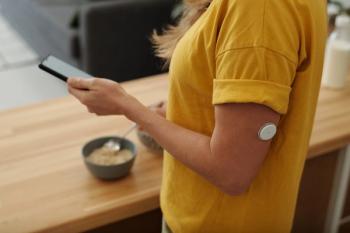
I think the biggest misconception is that having access to a service within a certain number of miles means that you're covered. A clinic can be a dot on a map and still be inaccessible. A patient doesn't have transportation, they can't miss work, they have no child care. A 6-week wait on a critical disease state, or they can't afford the medication we prescribe, that’s not meaningful access. That's what we see every day. Technology is not going to replace a local health care provider. It's an answer, but not the solution. AI, telehealth, remote monitoring, and mail order, that can support us, but it cannot replace something in place. You can't download trust, and trust is a huge part of rural health care.
READ MORE: