
















































Industry experts and physicians conducted a state-by-state breakdown of vaccination statistics for children and teenagers as well as adults and elderly individuals.
Industry experts and physicians conducted a state-by-state breakdown of vaccination statistics for children and teenagers as well as adults and elderly individuals.

Researchers looked for a better understanding of medical debt and what type of role the US government plays in lessening the burden on patients and their health care costs.

The CDC confirmed another human bird flu case, marking the first instance of the virus in a human without occupational exposure to infected birds or dairy cattle during the 2024 outbreak.

As Medicare open enrollment begins, the NCPA is urging CMS to facilitate appropriate PBM contracting for pharmacies in the upcoming plan year.

Emergent BioSolutions has announced that it will donate 50,000 doses of ACAM2000 for potential deployment across affected areas in Central Africa.

Stephanie Sober, MD, MSHP, investigator on the pivotal research that supported the prescription-to-OTC switch of Opill, shares insights on how the medicine is reshaping the reproductive landscape.

The government said the tests will “detect current COVID-19 variants and can be used through the end of the year.”

Researchers analyzed data from every county in the US and aimed to address the association between high social vulnerability and pharmacy deserts.

Access inequities are preventing the US-affiliated Pacific Island (USAPI) jurisdictions from meeting the WHO 2030 goal of 90% human papillomavirus (HPV) vaccination series completion coverage.
Timothy Mackey, MAS, PhD, discusses a study that sought to determine the risk of sourcing semaglutide from online platforms.

Research experts at the Brookings Institution in Washington, D.C., analyzed the savings estimates provided by CMS for its drug price negotiations and compared them with the institution’s own estimates.
Timothy Mackey, MAS, PhD, discusses the dangers associated with sourcing GLP-1s from illegal online pharmacies and the key role pharmacists play in warning patients.

Participants were asked to rate their level of concern on 26 health topics.

First To Know Syphilis Tests are expected to be available at major national retailers and online in late 2024.
A CDC report called for “increased efforts” to ensure parents can obtain all recommended vaccines for their eligible children and realize the full potential of the VFC program.

New prices will go into effect on January 1, 2026, for individuals covered by Medicare Part D prescription drugs.

TAK-003 could be a powerful combatant against the increasing global threat of dengue virus.
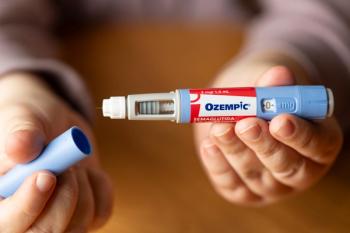
A study found that test products purchased from illegal online pharmacy operations had lower purity levels and significantly more semaglutide content than what was advertised on the label.

Researchers aimed to address the change in trust individuals exhibited regarding US physicians and hospitals during the COVID-19 pandemic.

Industry experts explored the increase in US prescription drug spending and how state spending targets come into play regarding patients’ rising out-of-pocket costs.

Researchers aimed to determine the risks and benefits of prescription drug advertising released in tandem with disease awareness programming.

“If people think COVID is no big deal and decide to forgo vaccinations, they’re essentially doubling their risk of developing long COVID,” wrote investigators.

The retail pharmacy chain issued an alert to its customers that purchasing data from 2017 to 2018 may have been breached by a third party.

The CDC issued a report on the state of the avian influenza, or bird flu, at the end of last week.

Sponsored Content
As the end of the DSCSA stabilization period approaches, Scott Mooney, vice president of distribution operations at McKesson, discussed what pharmacists should consider to be prepared.