Now Playing
Clinicians break down HIV PrEP, its near-99% protection, and who’s missing out—women, youth, and Southern communities in PrEP deserts.
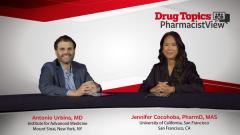
Welcome back to another Drug Topics Pharmacist View series. Antonio Urbina, MD and Jennifer Cocohoba, PharmD, MAS open the series on long-acting PrEP for HIV prevention with "What Is HIV PrEP and Who Needs It Most?" by defining PrEP and identifying who stands to benefit most.
Dr. Urbina, a professor of medicine at Mount Sinai who oversees its long-acting injectable program for HIV prevention, introduces his co-presenter. Dr. Cocohoba is a professor of clinical pharmacy at UCSF, where she serves the women's HIV program and advises the outpatient long-acting PrEP program. She opens by asking how to define pre-exposure prophylaxis for clinicians and patients less familiar with it.
Dr. Urbina explains that PrEP is for people who are HIV negative and is designed to prevent infection. The antiviral medications build up in tissues and block acquisition of the virus, much as contraception or routine vaccination protects before exposure. He distinguishes PrEP from post-exposure prophylaxis, stressing that the goal is to start before an exposure ever occurs. With adequate drug levels, both faculty cite efficacy of roughly 99% across oral and long-acting agents. Dr. Cocohoba notes that lower efficacy in some studies reflects difficulty adhering to a daily tablet, not weakness in the drugs themselves.
The discussion then turns to who should be offered PrEP beyond men who have sex with men. Dr. Urbina highlights women, particularly Black and Latina women, along with adolescents and young people. He argues for moving away from risk-based screening toward a broader sexual health conversation, since anyone who is sexually active may be eligible. Dr. Cocohoba proposes a second benchmark: comparing where new diagnoses occur with who is actually using PrEP. Where that gap is wide, as in Black and Latinx communities, prevention is falling short. Dr. Urbina adds that fewer than 1 in 3 people who could benefit are on PrEP. Both faculty point to the southern United States, including Atlanta, Miami, and rural areas, as the epidemic's new center, where so-called PrEP deserts persist.
The next episode in this series, "Starting the HIV PrEP Conversation in Primary Care and Pharmacy," features Dr. Urbina and Dr. Cocohoba on how a single open-ended question about sexual health can open the door to PrEP in the exam room and at the pharmacy counter.