Eli Lilly released phase 2b trial results comparing the investigational eloralintide-tirzepatide combo with tirzepatide 15 mg alone in patients with T2D and obesity.
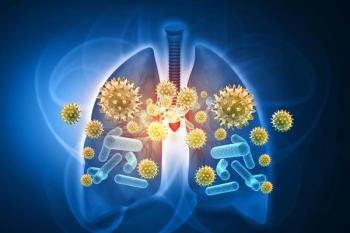
Lunsekimig cuts asthma exacerbations and boosts lung function while improving nasal polyps—an emerging dual-target biologic for respiratory care.
In an advancement for the treatment of chronic respiratory conditions, Sanofi announced that its novel biologic lunsekimig successfully met primary and key secondary end points in 2 major phase 2 clinical trials. The AIRCULES (
Simultaneously, the DUET (
“These data are promising and support our belief that the dual-targeting mechanism of lunsekimig may offer a novel treatment option for patients living with respiratory diseases, including asthma,” Houman Ashrafian, executive vice president and head of research and development at Sanofi, said in a news release.
For pharmacists, the clinical relevance of lunsekimig lies in its innovative structure as a bispecific Nanobody VHH molecule. Unlike traditional monoclonal antibodies (mAbs), Nanobody molecules are approximately 10 times smaller and are derived from heavy-chain-only antibody fragments found in camelids.1-3
Lunsekimig is a pentavalent construct consisting of 5 linked antibody fragments including 2 targeting thymic stromal lymphopoietin (TSLP), 2 targeting interleukin-13 (IL-13), and 1 designed to bind to human serum albumin to extend the drug’s half-life. By simultaneously blocking TSLP, an upstream initiator of inflammation, and IL-13, a downstream cytokine that causes tissue damage and mucus secretion, the drug aims to provide additive or synergistic benefits that may surpass the efficacy of current single-target biologics.1,2
Pharmacokinetic data from earlier first-in-human studies support a favorable profile for clinical use, showing a dose-proportional increase in exposure and linear elimination. In healthy volunteers, lunsekimig exhibited a terminal half-life of approximately 10 to 11 days across both intravenous and subcutaneous routes, with an absolute bioavailability of 54% following a single subcutaneous dose. This linear pharmacokinetic profile remained consistent in participants with mild-to-moderate asthma, where the drug was observed to reach maximum plasma concentration about 5 days after administration. Pharmacists should also note that because Nanobody molecules lack the Fc portion found in conventional mAbs, lunsekimig does not trigger Fc-mediated effector functions such as complement activation or phagocytic clearance, potentially reducing certain off-target risks.2,3
The safety and tolerability of lunsekimig have remained acceptable across the developmental spectrum, from phase 1 trials through the most recent phase 2 respiratory studies. In the AIRCULES asthma trial, the most common treatment-emergent adverse events were nasopharyngitis, upper respiratory tract infections, and headache. In the DUET CRSwNP study, injection site reactions and erythema were more frequent, though generally mild and self-limiting.1,2
Although an exploratory phase 2b trial in atopic dermatitis, known as VELVET (
From a pharmacodynamic perspective, lunsekimig has shown a rapid and robust impact on type 2 inflammatory biomarkers. Earlier proof-of-mechanism studies in patients with asthma demonstrated that a single dose could significantly reduce the fraction of exhaled nitric oxide, a key marker of airway inflammation, as early as day 8. Furthermore, the drug has been shown to reduce blood eosinophil counts, IL-5, and IgE levels, as well as improve small airway dysfunction in patients with impaired lung function at baseline.3
As lunsekimig moves into phase 3 studies, it represents a promising new tool for pharmacists and clinicians seeking to manage patients who remain uncontrolled on standard-of-care inhaled corticosteroids.1
“Importantly, these findings underscore lunsekimig’s potential to address multiple critical aspects of respiratory disease management through its unique mechanism,” Ashrafian said in the news release.
READ MORE:
Are you ready to elevate your pharmacy practice? Sign up today for our