In part 2 of our pre-election series, detailing key health policies for pharmacists at this year’s midterms, a legal expert touches on MFN pricing, ACA subsidies, and more.
Timothy Aungst, PharmD; Ravi Patel, PharmD, MBA, MS; and Smit Patel, PharmD; provided much-needed nuance to the evolving nature of DTP pharmacy models in today’s landscape.
Despite operating in some capacity for quite some time now, the collective industry evolution toward direct-to-patient (DTP) pharmacy models from various health care entities is causing a significant shift in how prescription drugs are distributed in the US. With major corporations as well as the federal government pouring time and effort into DTP implementation, experts are asking the important questions for how to avoid challenges and take advantage of opportunities.
“If my patient is filling at one pharmacy, getting a specialty med delivered from another pharmacy, and now using a DTP model for access to something like a brand or a specific medication, these are challenges that have already existed,” Ravi Patel, PharmD, MBA, MS, former innovation lead at the Pittsburgh School of Pharmacy and practicing pharmacist at Blueberry Pharmacy, told Drug Topics. “The real question lies whether this is going to compound those issues or provide some clarity to say that we now have a very well-defined channel for which these patients can access their brands.”
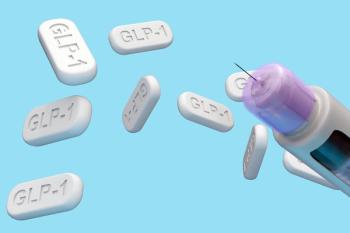
In part 2 of our interview series with Ravi Patel; Smit Patel, PharmD; and Timothy Aungst, PharmD; the dynamic trio of pharmacy and technology experts discussed the ongoing questions they’ve been asking themselves and collaborating on within the developing DTP pharmacy space. Touching on recent developments in DTP models, such as increased access to GLP-1s, they provided us with the necessary questions stakeholders and industry leaders must ask to properly implement these new approaches to care.
READ MORE:
Drug Topics: If DTP pharmacy models become the new norm in practice, how will this affect the common business practices of PBMs as well as retail and independent pharmacies?
Ravi Patel: I wanted to highlight that these have existed already for a little while now. Patients have had access to things like brands directly for chronic, ongoing disease management through a variety of disease states. Usually, as we think of them chronic and ongoing, our approaches to things like managing care under endocrinology for something like thyroids has been an access opportunity for patients for a while. The unique impact that we might think about for the nature of care—maybe at the point of dispensing, maybe in that framework of PBMs for reimbursement—is that they kind of already exist; some of these challenges that we think about: consistency of care. If my patient is filling at one pharmacy, getting a specialty med delivered from another pharmacy, and now using a DTP model for access to something like a brand or a specific medication, these are challenges that have already existed. The real question lies whether this is going to compound those issues or provide some clarity to say that we now have a very well-defined channel for which these patients can access their brands.
A really interesting direct shift that we've seen in the last 18 months, maybe 2 years, has been the access to something like GLP-1s. We saw when they were first made available that they were very uniquely defined and constrained in terms of accessibility, as well as questions of things like clinical applications and review. As that demand increased, as the back-end manufacturer and wholesaler supply chain was made more robust, we saw that switch to DTP access—some of which was economic, some of which was focused on the accessibility in terms of where to find this info, and some of it was the question of the economics.
If that patient is paying directly to that manufacturer, what does that mean for the models that might already be in place? It means that we'll see more of the same: multiple challenges around consistency of care, adherence, and some clinical questions that we'll have to think about. Is this clinically defensible for a specific medication to now be accessible directly to a patient compared with ongoing prescriber, pharmacy, and patient care.
Drug Topics: With these DTP models developing rapidly for swift integration, what challenges have come up or do you expect to arise as the marketplace moves closer and closer to a new pharmacy landscape?
Timothy Aungst: There's a lot of things that are not sustainable with our current health care practices, and we know that. I think that's why we're advocating for change. I mean, the biggest mistake you can make is just say ‘We’ve reached peak performance’ and just keep doing it, because we're not there. However, how do we do that? We have a lot of businesses, PBMs, current pharmacy incumbents, that are set to continue as things are. DTP offers another pathway. It offers also opportunities for new companies to come in to piggyback on that, or to drive health care in a different direction, for all intents and purposes.
We're going to see some bickering in health care, to cut to the chase. We're going to see our current incumbents not like some of these things. We're going to see some of them have to figure out how to adjust. I think we'll see a different carve-out within pharmacy; we'll see different companies engage in these things. Other companies may try to block some of these things. It's going to leave a lot of different pharmacy businesses to decide, well, which path am I going to take in the future? [Do] I want to work directly with a branded pharmaceutical company? Do I want to go in a different means of selling medications to my patients that doesn't necessarily mean it's insurance- and payback-driven?
The question right now is, what is going on, and what does your business look like in the next 5 years with these expectations of changing. Our current mechanisms are non-sustainable. Pharmaceutical companies are trying to offer another possibility. Other companies are trying to offer other possibilities, and these are all built on all these new technological developments that facilitate this stuff.
On the flip side, it could cause problems. The one thing I'm concerned [with] clinically is medication reconciliation. It’s going to be a headache for me personally working in the clinical space, for instance. You get your medication from which pharmacy, which business, this thing, that thing? This is an example where I'm a little scared. I can see the benefit for my patients, for access, yes, but my other concern is how do we handle all this data coming from different silos that come together? Are we even there?
Yeah, we want to do this, but we have to build up a lot of back-end for this. Otherwise, we could come out and cause other issues there. I think we're going to go in that direction. There's a lot of opportunities, a lot of threats, but this is going to take time. This may be the opportunity for some people to get into the space to really build out where these weaknesses are because we don't have anything present to handle it.
Ravi Patel: I'll build on that with what Tim had mentioned. We have been talking about this for a while between the 3 of us, because we see it from so many different lenses. I can't even think to play a policy expert on TV if I tried. But what I think about often is a question of experience. I can think about asking myself a lot of these questions. One of the things that, as a group, we've thought about are 3 buckets that might move things forward. Tim addressed some of the important factors when we think about market strategy, financial sustainability; these are great questions for a lot of the impacted directions for organizations that might be thinking strategically.
If we looked at it from the lens of experience, some of the questions we ask ourselves is the question of access. Does this change what patients can engage with for the medications that they'll get? We think about the evidence of a medication when we think about whether or not a prescriber wants to start a patient on a specific medication. We think about what we might lose in addition to what we might gain for that clinical access through the evidence of a specific medication.
And then, of course, the safety. What is the impact of removing some component of care that goes directly to a patient with that medication? Are we thinking about monitoring for therapeutic index? That's some of the frame that we think about when we ask ourselves this question that I'm trying to frame in our lens. What are we looking at with these different models? Is it providing more access? What's the evidence that makes it clinically defensible, and is it safe?
Smit Patel: Tim covered on a lot of the hows—the workflows, the infrastructure, the incentives, the business behind what traditionally pharmacies used to do. [But] what does that future look like? What Ravi mentioned around more clinical aspects of safety—the activation of those patients, the continuity of those patients with those independent pharmacies—is just critical.
The opportunity, the challenge, I think, for the pharmacy world and the practice is going to be: How do we evolve our practices and thinking from those dispensing high-volume-based or specialty-service-based, to a more connected service driven in a digitally integrated model? In vision, a lot of people wanted to do that but did not have the piping to do that, or the policy support, or the business model innovation to do that. Now, I think we are entering that phase of moving from those hows and whats [that] we know, to how do we drive it and build it in the practice?
READ MORE:
Pharmacy practice is always changing. Stay ahead of the curve: Sign up for our