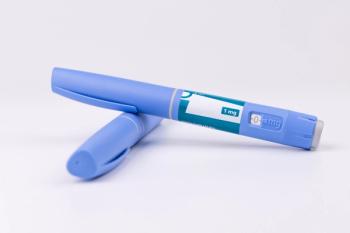
Community pharmacists offer accessible care, improve medication adherence, and build trust through education, vaccination support, and local health leadership.
Phase 3 data show subcutaneous risankizumab boosts remission and endoscopic healing in moderate-to-severe Crohn cases, with familiar safety and easier dosing.
AbbVie announced positive topline results from its phase 3 AFFIRM (
These findings are particularly significant for clinical pharmacy practice as they evaluate a subcutaneous induction option, whereas the currently approved regimen for Crohn disease requires initial intravenous induction doses of 600 mg at weeks 0, 4, and 8.1
The AFFIRM trial highlights the efficacy of risankizumab in a predominantly treatment-refractory population, as 65% of participants had previously failed advanced therapies. Among these patients, half had failed 2 or more advanced treatments, 23% had failed ustekinumab, and 12% had failed a Janus kinase inhibitor. For pharmacists managing complex cases, the data showed that endoscopic response rates were notably high.1
"Crohn disease is a complex, often debilitating condition that affects far more than a patient's digestive health, disrupting work, relationships, and daily life," Millie D. Long, MD, MPH, chief of the division of gastroenterology and hepatology at the University of North Carolina at Chapel Hill, said in a news release.1 "These high endoscopic response rates across populations, in particular among those who have not failed an advanced therapy, demonstrate the potential of subcutaneous induction risankizumab as an effective therapy for Crohn disease."
Beyond the 12-week induction period, patients who responded to treatment and continued into a 12-week maintenance phase saw sustained benefits, with 67% in clinical remission and 57% showing endoscopic response at week 24.1
From a pharmacological perspective, risankizumab is a high-affinity humanized IgG1 monoclonal antibody that selectively inhibits interleukin-23 by binding to its p19 subunit. Unlike some other biologics, it does not bind to IL-12, a cytokine that shares a p40 subunit with IL-23. Pharmacists should note that the drug exhibits linear and time-independent pharmacokinetics, with a terminal elimination half-life of approximately 21 days in patients with Crohn disease. Although factors like body weight and baseline serum albumin can influence drug exposure levels, population pharmacokinetic analyses have indicated that these variations generally do not have a clinically meaningful impact on efficacy or safety.2
The safety profile of the subcutaneous induction therapy in the AFFIRM study was consistent with the known safety data for risankizumab, and no new safety risks were observed during the trial. The most frequent adverse events reported included upper respiratory tract infections, abdominal pain, and arthralgia. Serious adverse events occurred in only 0.5% of the risankizumab group compared to 3.1% in the placebo group.
Despite this favorable profile, the broader clinical safety information for risankizumab emphasizes that the drug may increase the risk of infections and requires screening for tuberculosis prior to initiation. Additionally, pharmacists should be aware of rare but serious risks, such as liver enzyme elevations and hypersensitivity reactions, which require monitoring during the course of treatment.1,2
As Crohn disease is a chronic, systemic condition characterized by unpredictable flares and persistent gastrointestinal inflammation, the potential for an entirely subcutaneous induction and maintenance pathway could simplify treatment logistics and improve patient adherence. Currently, the medication is available in several formats, including 150 mg prefilled syringes and pens, as well as on-body injectors for maintenance dosing.1-3
"This study evaluated a difficult-to-treat Crohn disease patient population, including a majority with a prior failure to advanced therapy, and these data reinforce risankizumab as a leading, effective treatment for patients," Kori Wallace, MD, PhD, vice president and global head of immunology clinical development of AbbVie, said in the news release.1
As AbbVie prepares to share full results at future medical congresses and in peer-reviewed journals, these topline data reinforce the role of IL-23 p19 inhibition as a leading strategy for managing moderate-to-severe inflammatory bowel disease, even in patients who have exhausted other advanced therapeutic options.1,2
Are you ready to elevate your pharmacy practice? Sign up today for our