CGMs, Automated Insulin Delivery Support Personalized Diabetes Treatment
Key Takeaways
- Early CGM use at diagnosis reveals postprandial excursions, nocturnal trends, and variability that A1C misses, enabling earlier, individualized titration and reducing therapeutic inertia.
- Real-time CGM feedback can catalyze meaningful lifestyle change, occasionally improving control enough to defer or streamline pharmacotherapy initiation after short-interval follow-up.
Pharmacists leverage CGM and automated insulin delivery to personalize diabetes care, prevent errors, and expand equitable access to technology.
The landscape of diabetes care is undergoing a transformation as fingersticks and episodic monitoring give way to real-time data and automated logic. For pharmacists, this evolution represents a shift toward a more proactive, data-driven role in patient management. At the heart of this shift are continuous glucose monitoring (CGM) and automated insulin delivery (AID) systems, technologies that are moving from specialized tools for the few to routine components of care for the many.1,2

The Early Adoption of CGMs
The current standard of care increasingly favors early initiation of CGM, with recommendations now suggesting its use at the time of diagnosis. Jennifer Goldman, PharmD, CDCES, BC-ADM, FCCP, professor of pharmacy practice at the Massachusetts College of Pharmacy and Health Sciences, explains that this allows care to progress beyond the limitations of the hemoglobin A1C, which is useful but fails to capture the daily nuances of glucose variability, nocturnal trends, or postprandial excursions.
“Recommending CGM earlier in the diabetes journey is important because it moves care beyond A1C alone. A1C is useful, but it does not show daily glucose patterns, hypoglycemia, postprandial excursions, overnight trends, or glucose variability,” Goldman said. “CGM gives patients real-time feedback. They can see how food, activity, stress, illness, sleep, and medications affect glucose. That visibility can improve engagement, support behavior change, and facilitate earlier therapeutic adjustments.”
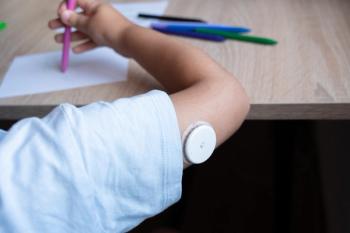
Because of the continuous monitoring, CGM data help pharmacists identify patterns, including nocturnal hypoglycemia, missed mealtime insulin, overtreatment, undertreatment, and issues in medication timing, according to Goldman. Using this data, pharmacists can help to personalize treatment based on how the medication plan works in their everyday life. With earlier adoption, CGMs can reduce therapeutic inertia and increase the achievement of glycemic targets.
Hailey Choi, PharmD, BCACP, CDCES, associate professor of pharmacy practice at Massachusetts College of Pharmacy and Health Sciences, observes that this real-time feedback often drives sustainable lifestyle changes, sometimes to the point where patients achieve such significant improvements that the initiation of pharmacotherapy can be delayed or optimized more efficiently.
“When a patient is referred to me for diabetes management, one of the first things I do is place a CGM and schedule a follow-up visit in about 2 weeks to review the data before initiating pharmacotherapy whenever appropriate,” Choi said. “Quite often, I see significant improvements in glycemic control during that short period alone. In some cases, patients achieve near-perfect glucose control and no longer require medication initiation. This really highlights how powerful CGM can be.”
AID Systems as the Preferred Method for Type 1 Diabetes
As the technology advances, AID systems—which link a CGM to an insulin pump via a control algorithm—are becoming the preferred method for many individuals with type 1 diabetes. The hybrid closed-loop systems automatically adjust basal insulin delivery every few minutes to maintain glucose within a target range. However, Goldman added that these systems are not "set it and forget it" solutions.
“Pharmacists can play a key role by helping patients understand that automated insulin delivery systems are not interchangeable,” Goldman said. “Each system has specific CGM compatibility, pump requirements, smartphone requirements, app requirements, insulin compatibility, and training needs.”
It is important for patients to understand the limitations of insulin pumps as well as CGMs. Goldman added that pharmacists should confirm which CGM works with which insulin pump, the compatibility across smartphones, if the system requires manual meal boluses, and what the patient should do if the signal of the CGM is lost.
“Most systems currently used in practice are hybrid closed-loop systems, meaning the algorithm adjusts insulin delivery automatically, but the patient still needs to announce meals, enter carbohydrates, respond to alerts, and troubleshoot infusion set or sensor issues,” Goldman said.
Choi added that pharmacists should know every detail of the CGM and should help patients verify compatibility and avoid starting a system that would not work with their current coverage and supplies.
“Pharmacists can also help set realistic expectations,” Goldman said. “AID reduces burden and improves glycemic outcomes, but it does not eliminate diabetes self-management. Patients still need to understand sick-day rules, ketone testing, backup insulin plans, pump failure instructions, and when a blood glucose meter should be used to confirm a sensor value.”
Errors and Safety Across Technology
Safety remains a top priority for pharmacists when managing patients on these advanced regimens. Choi notes that some of the highest-stakes errors involve insulin delivery interruptions due to infusion set failures, which can lead to rapid hyperglycemia and ketoacidosis. Pharmacists must ensure patients know when to confirm a sensor reading with a fingerstick, particularly when symptoms do not match the data or when glucose is changing rapidly.
“The highest-stakes errors are insulin delivery interruption, over-trusting CGM data when it does not match symptoms, not having backup [blood glucose monitoring] supplies, misunderstanding alarms, and not knowing when the system is in manual mode versus automated mode,” Choi said. “With pumps and AID systems, infusion set failure, occlusion, or dislodgement can lead to rapid hyperglycemia and [diabetic ketoacidosis] because patients are receiving only rapid-acting insulin.”
She said that pharmacists can teach patients to respond quickly to unexplained hyperglycemia as well as check ketones, change the infusion site, and comply with a backup insulin plan. For CGMs specifically, pharmacists should counsel patients to confirm with a fingerstick when the symptoms aren’t matching the data from a CGM. Medication and supplements should also be reviewed, as they may interfere with CGM accuracy.
Goldman added that errors typically involve assuming the technology can do more than it actually is.
“Patients may think a hybrid closed-loop system is fully automatic and may stop bolusing for meals,” she said. “That can lead to prolonged hyperglycemia and, in insulin-deficient patients, increase the risk for ketosis and diabetic ketoacidosis.”
Furthermore, Goldman added that other errors can include sensor placement, not understanding warm-up periods of the CGM, ignoring compression lows, failing to rotate infusion sites, using expired insulin, not changing infusion sets appropriately, and not knowing what to do during illness.
Navigating Health Disparities for CGM Adoption
A significant challenge in the widespread adoption of these technologies is the presence of health disparities. Historically, patients were often expected to earn access to advanced technology through demonstrated adherence, a mindset that both Goldman and Choi argue must change. Technology gatekeeping can prevent those who might benefit the most from receiving these tools.
“For patients with lower technology literacy, I try to simplify the counseling: what the number or colors mean, what the arrow means, when to treat a low, when to call the clinic, and when to confirm with a fingerstick,” Choi said. “For patients with cost barriers, pharmacists can help identify formulary-preferred products, manufacturer support programs, and whether intermittent professional CGM could still guide therapy.”
Pharmacists are on the front lines of addressing these inequities by navigating insurance hurdles, utilizing manufacturer support programs, and providing simplified, culturally sensitive education. In some settings, pharmacists have used grant funding to provide free sensors to those facing financial barriers, further bridging the gap in care.1
“We should not assume based on a person's age, education level, socioeconomic status, health literacy, language, or background that they will not benefit from diabetes technology or be unable to use it successfully,” Goldman added. “Some of the most successful technology users are patients who others may have underestimated. The growing evidence supporting CGM use across broader and more diverse populations reinforces the importance of avoiding technology gatekeeping and ensuring equitable access.”
She added that many patients that struggle with glycemic management could potentially have the most to gain from CGMs and AID systems. Instead of creating additional barriers, she said that pharmacists must identify barriers, provide education and support, and most importantly, give the patients opportunities to succeed. Access can be expanded during community pharmacy programs, primary care-based CGM initiatives, telehealth follow-up, professional CGM services, and simplified training approaches, according to Goldman.
“Equity requires more than prescribing the device. We need to make sure patients can actually get it, use it, and benefit from it,” Choi said. “Practical tactics include checking pharmacy versus DME coverage, helping with prior authorizations, using professional CGM when personal CGM is not feasible, providing in-person training, using teach-back, offering simple written instructions, involving caregivers, and scheduling early follow-up after device start.”
Conclusion
“Pharmacists can make diabetes technology less overwhelming,” Goldman said. “The first step is practical onboarding: helping patients understand how to apply the sensor, start the app or receiver, set alerts, share data, and know when to call for help.”
She added that pharmacists can also reiterate the most important safety points, including confirming with a blood glucose meter, treating hypoglycemia, checking ketones, what to do when the pump fails, and how to manage sick days.
“Follow-up is equally important. A brief check-in after the first 1 to 2 weeks can identify common problems early, including alarm fatigue, skin reactions, sensor adhesion issues, anxiety from seeing glucose data, or confusion about trend arrows,” Goldman said. “Pharmacists are uniquely positioned to translate CGM and pump data into practical behavior changes and medication adjustments in collaboration with the broader health care team.”
Looking toward the future, AID systems are evolving to meet the needs of specific subpopulations, such as pregnant women, older patients, and athletes. For children, the focus is on preventing hypoglycemia and managing the variable insulin requirements of puberty, but for older patients, the priority is often safety and the reduction of hypoglycemia unawareness. Researchers are also exploring fully closed-loop systems that would eliminate the need for manual meal announcements, as well as multihormonal systems that incorporate glucagon to better protect against lows.2,3
READ MORE:
Are you ready to elevate your pharmacy practice? Sign up today for our