A structured recommendation workflow at a community pharmacy was associated with more multivaccine patients than routine practice.
Exploring the real-time capabilities of chatbots and artificial intelligence (AI), researchers investigate how this technology would impact older adults’ pneumococcal vaccine rates.
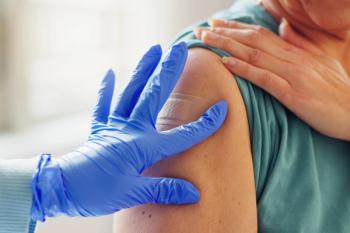
Compared with the standard intervention, a hybrid, artificially intelligent (AI) chatbot was more effective in boosting pneumococcal vaccination (PV) rates among adults 65 and over, according to a study published in JAMA Network Open.1
“Chatbots are computerized programs that replicate human interactions through various forms of communication,” wrote the authors of the study. “Chatbots have demonstrated good abilities to reach the target population and increase vaccination uptake.”
In today’s digital era, the use of chatbots has become second nature to many internet browsers. According to IBM, a chatbot is a computer program that simulates conversations between the computer and a human user. Although they all do not utilize AI, it is growing increasingly prominent amongst these chatbot platforms and throughout health care in general.2
AI is revolutionizing the way society approaches their everyday lives, and as its capabilities are further developed, several studies and applications for its use in boosting population-wide vaccine coverage have already been conducted. Through AI solutions, researchers realized this technology’s ability to identify locations with unvaccinated populations, enhance data-backed decision-making processes, and reduce vaccine skepticism through AI interventions.3
READ MORE:
The latter approach, using AI solutions to reduce skepticism, is exactly what researchers of the current study explored among older adult patients in Hong Kong.
“People 65 years of age or older in Hong Kong have higher risk of pneumococcal disease (PD) and invasive PD (IPD) than people younger than 65 years, with an IPD incidence of 4 in 100,000 and a case fatality rate between 21.4% and 40.0%,” they continued.1 “PV is effective in preventing community-acquired PD and IPD among people aged 65 years or older without safety concerns.”
The researchers aimed to better understand the capabilities of chatbots in a population that has historically experienced barriers to using technology. According to a study in Nursing and Midwifery Studies, these barriers were based on factors such as physical, mental, and educational limitations, as well as limited access to and unfavorable opinions toward technology.4
In the past, research has shown that educational sessions conducted by nurses and volunteers resulted in improved PV rates among older adults. However, this approach utilized significant resources and was not as sustainable as an AI-based approach. Despite the barriers to technology among older adults, researchers of the current study believe a hybrid AI chatbot could bridge the gap of getting to real-time and evidence-based conversations for this population.1
The researchers’ goal was to compare the efficacy between a hybrid chatbot with real-time Q&A functions and a standard online intervention delivered via a chatbot. To test each, they gathered Hong Kong residents 65 years and older with no prior PV record and conducted a parallel-group randomized clinical trial (RCT) between May 1, 2023, and November 30, 2024.
“In the stage of change group, the rule-based component of the hybrid chatbot assessed participants’ stage of change regarding PV uptake and then delivered stage-of-change–tailored interventions at months 0, 1, 2, and 3,” wrote the authors.1 “In the standard intervention group, the chatbot sent participants a link to access a standard online video covering PV information at months 0, 1, 2, and 3.”
Their primary outcome was self-reported PV by the 12th month of the trial. A total of 374 participants (mean age, 69.6 years; 57% women) were included in the analysis, with 187 in the standard intervention and 187 in the hybrid chatbot groups.
PV uptake ended up being much more prominent among the AI chatbot (29.4% uptake) participants when compared with the standard intervention (18.7% uptake).
According to the researchers, this finding was owed to a number of capabilities among the AI chatbot tailored to patients’ use. Some of those capabilities include the bot’s functions in improving interpersonal health communication, creating personal relevance, and providing real-time answers that enhance engagement with digital interventions.1
As AI continues to make headlines and be a societal focus, the success of its use in health care will certainly be further elucidated in the coming years. With the technology backing AI and various chatbots reliant on a specific threshold of income, these tools may need to be further developed to test their viability in lower-income countries. However, it is a step in the right direction for boosting necessary vaccine rates among older adults that have historically shied away from the use of technology.
“This RCT showed that a hybrid chatbot was more effective than a chatbot-delivered standard intervention in increasing PV uptake among community-dwelling individuals 65 years of age or older,” they concluded.1 “A hybrid chatbot may be a sustainable approach for promoting PV among older adults.”
READ MORE:
Don’t get left behind: Sign up today for our