Pharmacist-backed picks help families manage fever and pain, seasonal allergies, and cough and congestion as kids head back to the classroom.
This announcement is another move stemming from the federal government's skeptic views on vaccine technology and its efficacy among US patients.
This story was updated at 1:17 pm on December 5, 2025.
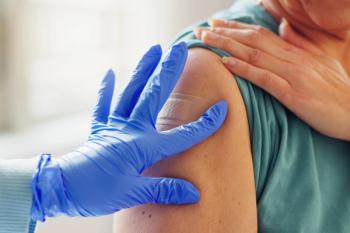
The Advisory Committee on Immunization Practices (ACIP) announced its vote to remove the universal recommendation that all newborns receive hepatitis B virus (HBV) vaccination, according to
"ACIP recommends individual-based decision-making, in consultation with a health care provider, for parents deciding when or if to give the HBV vaccine, including the birth dose," according to the CNN Health update. "Parents and health care providers should consider vaccine benefits, vaccine risks, and infection risks."
In the Friday vote, 8 ACIP members voted to abandon the recommendation, while the remaining 3 voted not to.
READ MORE:
This is yet another major update to the US' approach toward public health during US Health and Human Services (HHS) Secretary Robert F. Kennedy Jr.'s tenure. After maintaining and practicing his antivaccine beliefs while in office, as well as firing and replacing all 17 ACIP members earlier this year, RFK Jr. is now looking to update the population's collective approach toward childhood vaccination.1
Prior to this update, the collective agreement for childhood HBV vaccination was that every newborn receives it before they leave the hospital. This recommendation was supported by the American Academy of Pediatrics (AAP), the American Academy of Family Physicians, the American College of Obstetricians and Gynecologists, and, previously, the CDC.2
However, with the ACIP vote, the CDC is no longer recommending universal HBV vaccination. Rather—similar to its recent vote on the COVID-19 vaccine3—the ACIP members believe shared decision-making between parents and providers is the best approach going forward.
Although those who voted against this update claim there is a lack of evidence supporting it, the hand-picked members selected by Kennedy continue to move the needle in the US government’s vaccine recommendations. But among the advocacy bodies for children and their immunization schedules, ACIP and the CDC are the only ones that experts believe will eliminate the recommendation.
“I think you’ll see the AAP, the American College of Obstetricians and Gynecologists, and other major societies continue to recommend the vaccine at birth,” William Schaffner, MD, told
According to many of the aforementioned societies as well as public health experts across the aisle, this move is going to create significantly more obstacles for accessing and using vaccines. While the update may be viewed as a way of giving parents more control of their children’s care, experts argue that was already the case across US households.
“[ACIP] advises the CDC on which public health recommendations to adopt,” wrote authors of the Reuters article.4 “The recommendations affect US health insurance coverage and play a key role in assisting physicians who are choosing appropriate vaccines for patients.”
Former National Institutes of Health official—and ACIP member who voted against the update1—Joseph Hibbeln, MD, believes the recommendation will directly cause hepatitis B rates to rise among children, adolescents, and adults alike.4 According to a University of Minnesota article, hepatitis B cases among children and adolescents dropped by 99% between now and the 1991 recommendation.5
With this groundbreaking update and no required childhood HBV vaccination, these trends are expected to reverse.
Throughout the 21st century, health care experts from all backgrounds continued to discuss the safety and efficacy of vaccine technology. With proven evidence of their effects and real-world declines in disease rates as a result, vaccines have been the number one resource in improving public health efforts.
However, in RFK Jr.’s short stint as HHS secretary, he’s removed COVID-19 and HBV vaccine recommendations, cut funding for mRNA vaccine development, and removed the ACIP members who have upheld evidence-based recommendations.4
Based on the timeline of actions stemming from RFK Jr. and his colleagues, this administration has shown no signs of slowing its desire to move against the grain of evidence-based health care recommendations. RFK Jr.’s supporters have stated that all US patients should be suspicious when told that something is safe, especially for vaccines.
While several organizations outside of ACIP and the CDC have not supported these recent updates, the disconnect between established health care societies and the federal government seemingly presents no end in sight.
“I have never seen a serious reaction to a hepatitis B vaccine,” concluded Sean O’Leary, MD, MPH, chair of infectious diseases at the AAP, according to the University of Minnesota article.5 “We gave literally thousands of babies [the] hepatitis B vaccine. I never once saw a fever actually associated with [the] hepatitis B vaccine.”
READ MORE:
Ready to impress your pharmacy colleagues with the latest drug information, industry trends, and patient care tips? Sign up today for our